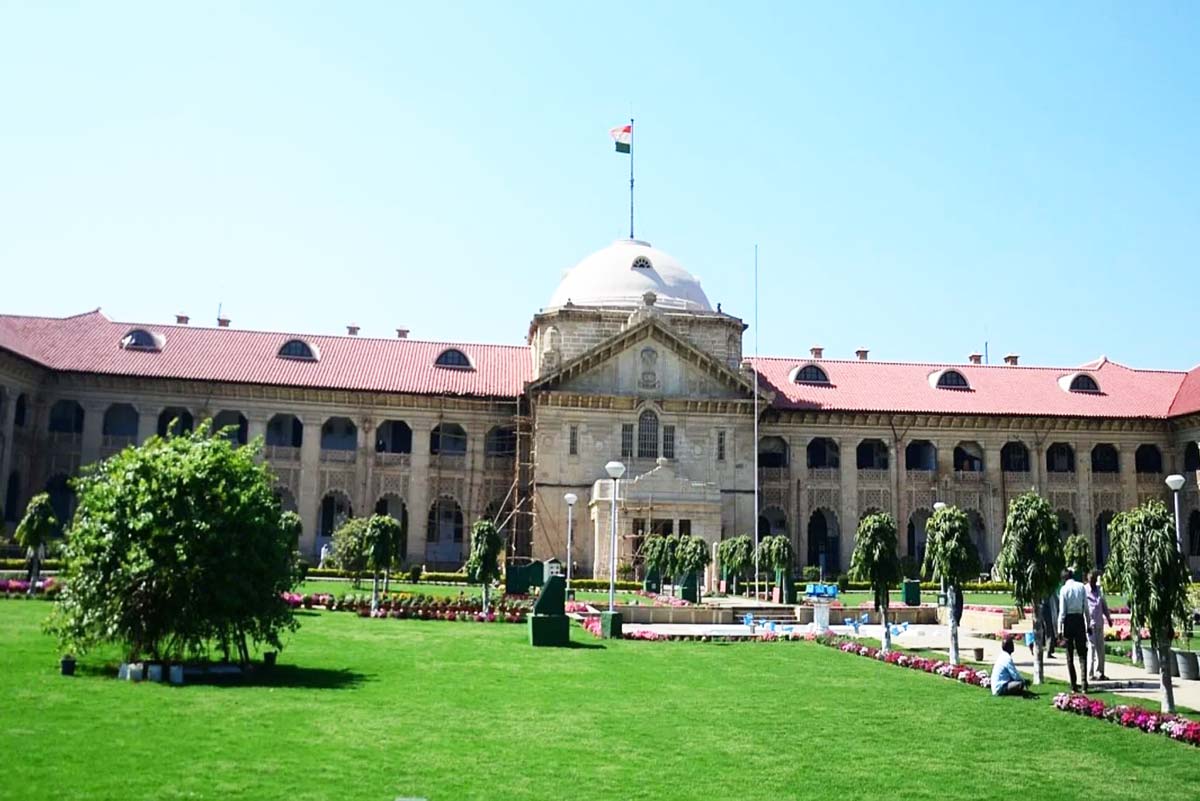

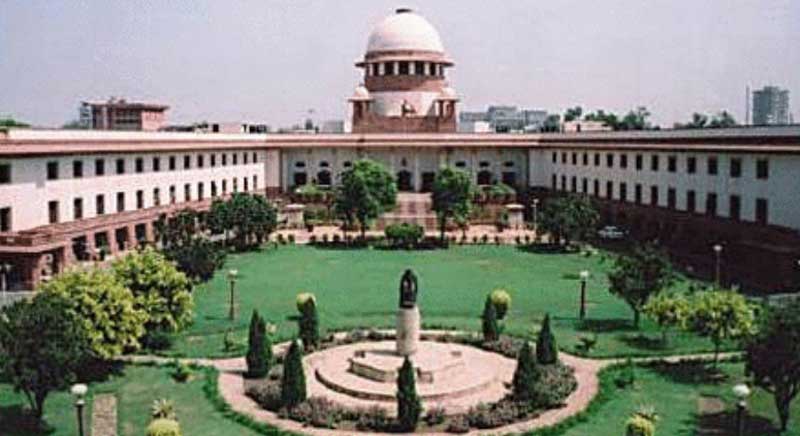


The Supreme Court has reiterated that registration does not, by itself, prove the validity of a Will.
In a judgment delivered on 13 August 2026, a Bench of Justice Sanjay Karol and Justice Nongmeikapam Kotiswar Singh held that although registration may provide some supporting evidence about the genuineness of a Will, it cannot replace the statutory requirement of proving its execution and attestation.
The ruling is significant for disputes involving inherited property because a registered Will can often appear, at first sight, to carry greater evidentiary weight than an unregistered document. The Court has made clear, however, that registration and proof are two different legal questions.
A party relying on a Will must still establish that it was executed in accordance with Section 63(c) of the Indian Succession Act, 1925 and proved in the manner required by the applicable evidence law. Where the Will is surrounded by suspicious circumstances, those doubts must also be satisfactorily addressed.
The dispute before the Court involved agricultural land and house property, competing branches of a family and a Will executed decades before the litigation reached the Supreme Court. Ultimately, the Court found that the beneficiaries relying on the Will had failed to discharge the burden placed upon them.
The result was the restoration of a trial court decree granting the opposing family branch a two-thirds share in the disputed property.
Why registration does not settle the question
A Will is different from many other legal documents because its legal effect ordinarily begins after the death of the person who made it.
The testator is therefore no longer available to explain the circumstances in which the document was prepared, signed or registered. A court must consequently depend on other evidence to determine whether the document genuinely represents the deceased person’s final testamentary intention.
For that reason, Indian law imposes specific requirements for the execution and proof of a Will.
Section 63(c) of the Indian Succession Act requires an unprivileged Will to be attested by at least two witnesses. The witnesses must have seen the testator sign or affix a mark, or must have received an acknowledgement of that signature or mark. Each witness must then sign the Will in the presence of the testator.
Section 68 of the Indian Evidence Act, 1872 provides the ordinary rule for proving documents that are required by law to be attested. At least one attesting witness must generally be called to prove execution when such a witness is alive, subject to the statutory conditions.
There is a proviso to Section 68 concerning registered documents. But the proviso specifically excludes Wills.
That means registration cannot be used to avoid the ordinary requirement of proving a Will through an attesting witness where that witness is available.
The Supreme Court’s conclusion is therefore straightforward: a registered Will is not a self-proving document.
Registration can support a case. It cannot replace the proof required by succession and evidence law.
The family dispute behind the ruling
The case arose from a long-running dispute over family properties originally associated with Vaiyapuri Gounder.
He died around 1925 and was survived by his third wife, Arukkaniammal. She subsequently became the central figure in the succession dispute.
Arukkaniammal died in 1985, without children and intestate, according to the circumstances considered by the Court.
Members of the branch descended from Vaiyapuri Gounder’s first wife later brought a partition action, claiming a two-thirds share in the properties. Their claim relied upon the succession rules governing property inherited by a female Hindu from her husband or father-in-law.
The opposing branch disputed that claim.
Among the documents relied upon by that side was a registered lease deed from 1943 and, more importantly, a registered Will dated 15 December 1976.
The Will was said to have been executed by Arukkaniammal in favour of four grandsons. It purported to give them absolute rights over the A-schedule agricultural properties.
Other natural branches of the family were excluded.
The litigation eventually required the courts to decide whether that Will could legally displace the succession claim of the other heirs.
The answer depended not on registration alone, but on whether the Will had been properly proved.
The special burden attached to proving a Will
The Supreme Court emphasised that a Will cannot simply be treated like an ordinary document.
The person who relies upon it — generally called the propounder — has an initial burden to establish its due execution.
That includes proving the requirements concerning the testator’s signature or mark and the attestation of the document.
There is an additional layer where the surrounding circumstances create legitimate doubts about the Will.
The court is not required to assume that every registered Will is genuine merely because it was accepted for registration.
The propounder must satisfy the judicial conscience that the document represents the genuine testamentary act of the deceased.
This does not mean that courts are entitled to reject a Will merely because its terms appear unusual.
A testator generally has considerable freedom to decide who should inherit. A person may leave property to one relative and exclude another. An unequal distribution is not, on its own, proof of fraud or undue influence.
The difficulty arises when several unusual features appear together and the evidence offered to explain them is inadequate.
That was the situation the Supreme Court found in this case.
A scribe is not automatically an attesting witness
One of the important issues considered by the Court concerned the scribe of the Will.
A scribe is the person who writes or prepares the document. An attesting witness performs a different legal function: the witness signs to attest the execution of the document.
The two roles can sometimes be performed by the same person, but merely writing a Will and signing it does not automatically make the scribe an attesting witness.
The Supreme Court referred to earlier decisions, including N. Kamalam v. Ayyasamy and M.L. Abdul Jabbar Sahib v. H.V. Venkata Sastri & Sons, while explaining this distinction.
The critical factor is the intention behind the signature.
A person signing with the intention of witnessing and attesting execution may qualify as an attesting witness. A person signing merely because they prepared or wrote the document does not necessarily do so.
In the case before the Court, the evidence of the scribe, D.W.2, was important. His own statements during cross-examination did not support the proposition that he had signed the document with the necessary intention to attest its execution.
The distinction has practical consequences.
In a Will dispute years after execution, parties cannot simply identify every person who signed the document as an attesting witness. The court must examine the capacity in which that person signed and whether the statutory requirements were actually fulfilled.
Section 69 cannot be invoked merely by claiming a witness is unavailable
The case also raised the question of Section 69 of the Evidence Act.
Section 69 provides an alternative method of proving an attested document where no attesting witness can be found.
It allows proof through handwriting evidence, including evidence concerning the handwriting of the attesting witness and the executant.
But the Supreme Court stressed that Section 69 cannot simply be invoked whenever a party does not wish, or is unable, to produce an attesting witness.
There must first be a factual foundation showing why the ordinary procedure under Section 68 cannot be followed.
In other words, the propounder must first establish that the relevant attesting witness is dead, unavailable or cannot be found despite appropriate efforts.
Only after that gateway is crossed can the alternative evidentiary mechanism under Section 69 be used.
This distinction proved important in the case.
One attesting witness was dead, but the second was not properly accounted for
The evidence established the death of one attesting witness, Marappa Gounder.
His son provided evidence concerning his death, and the Court accepted that part of the case.
The position regarding the second attesting witness, Avanashi Gounder, was different.
The respondents failed to produce satisfactory evidence establishing his death or unavailability.
A statement from an interested beneficiary was not considered sufficient to establish the necessary factual foundation.
The Court pointed to the absence of convincing supporting material, such as appropriate records, evidence from family members or other proof showing that reasonable efforts had been made to locate the witness.
That failure mattered because without establishing the condition that permitted Section 69 to be used, the propounders could not simply move to handwriting evidence as an alternative to the ordinary proof required under Section 68.
The judgment therefore reinforces a procedural point that can have major consequences in succession litigation: an evidentiary exception must itself be proved before it can be relied upon.
Suspicious circumstances must be examined together
The Court then turned to the circumstances surrounding the Will itself.
This was not simply a case where the propounders had failed to produce sufficient evidence concerning an attesting witness. The contents and circumstances of the Will also raised questions.
The Court identified several circumstances that, taken together, created legitimate doubt.
One concerned the description of ancestral property as self-acquired property.
Another concerned the description of a step-daughter and her sons as biological descendants.
The Will also excluded other natural branches of the family without giving a clear explanation for that departure from what might otherwise have been expected.
The relationship between one attesting witness and a beneficiary was another factor.
The Court also attached significance to the failure to examine Alamathal, who was described as an important figure in the respondents’ version of the events.
Individually, these circumstances might not have been enough to defeat the Will.
The Court’s approach was instead cumulative.
A court considering a Will must look at the overall picture. If several circumstances point towards a genuine possibility that the document does not represent the free and informed decision of the testator, the propounder has to address those concerns with convincing evidence.
The Supreme Court concluded that this burden had not been discharged.
Age and illiteracy were not enough to invalidate the Will
The judgment does not establish that an elderly or illiterate person is incapable of making a valid Will.
That would be an incorrect reading of the decision.
Arukkaniammal’s advanced age and illiteracy were relevant circumstances, but neither factor automatically prevented her from making a Will.
An illiterate person can make a Will if the necessary legal requirements are satisfied and the person understands the nature and effect of the testamentary act.
Similarly, age alone does not establish incapacity.
The significance of those factors depends on the surrounding evidence.
Here, the concern arose because the testatrix’s age and illiteracy existed alongside other circumstances that required explanation. The propounders, in the Court’s assessment, did not provide sufficient independent and cogent evidence to remove the resulting doubts.
The distinction is important. The Court was not applying a rule against elderly or illiterate testators. It was examining whether the evidence as a whole established a genuine and properly executed testamentary disposition.
Excluding relatives is not automatically suspicious
Another point emerging from the judgment is that disinheriting family members is not, by itself, unlawful or conclusive evidence of a suspicious Will.
Testamentary freedom allows a person to depart from the order of inheritance that would apply if there were no Will.
But unexplained exclusion can become important when combined with other unusual features.
For example, if a Will gives everything to one branch while excluding close relatives, contains significant inaccuracies about the property or family relationships, and is supported by evidence that is incomplete or comes from interested persons, the cumulative circumstances may reasonably require explanation.
That was the situation identified by the Supreme Court.
The question was not whether Arukkaniammal was legally forbidden from favouring four grandsons.
She was not.
The question was whether the respondents had proved that she genuinely and validly chose to do so through the particular Will produced before the court.
The Supreme Court found that they had not.
The High Court’s approach was found insufficient
The Supreme Court also disagreed with the way the High Court had approached the suspicious circumstances.
The Court considered that the circumstances had effectively been examined separately instead of assessing their cumulative impact.
That distinction can be critical in testamentary litigation.
A suspicious circumstance rarely exists in isolation. A single error in a Will may be an innocent drafting mistake. A single family exclusion may be a legitimate exercise of testamentary freedom. A witness’s relationship with a beneficiary may have an innocent explanation.
But when several such circumstances appear together, their combined effect may be considerably greater than the effect of each individual fact.
The Supreme Court held that the propounders had not done enough to remove the legitimate doubts arising from that combined picture.
The partition decree was restored
The consequences for the parties were significant.
The Supreme Court allowed the appeals and set aside the common judgment and decree of the Madras High Court.
It restored the preliminary decree passed by the trial court in O.S. No. 665 of 1985.
That decree had declared the plaintiffs entitled to a two-thirds share under Section 15(2)(b) of the Hindu Succession Act, 1956.
The respondents’ separate suit for permanent injunction in O.S. No. 1344 of 1990 was also ordered to stand dismissed.
The effect was that the disputed Will did not displace the succession rights claimed by the opposing family branch.
READ: Indo-British Defense Partnership Targets Sovereign Aero-Engine Development
What the ruling means for registered Wills
The decision should not be understood as saying that registration has no evidentiary value.
Registration can still be a supporting circumstance.
A registered document has passed through a formal registration process, and that fact may be relevant when a court evaluates the overall evidence.
But registration does not answer every legal question raised by a Will.
It does not automatically establish that the testator understood the contents.
It does not establish, by itself, that the statutory requirements for attestation were fulfilled.
It does not automatically establish that an individual who signed the document was an attesting witness.
And it does not remove the obligation of the propounder to explain genuine suspicious circumstances.
The central distinction is therefore between a registered Will and a proved Will.
They are not legally synonymous.
The law has changed, but the principle remains relevant
The case refers to the Indian Evidence Act, 1872, which has since been replaced by the Bharatiya Sakshya Adhiniyam, 2023.
The new evidence law came into force on 1 July 2024.
The statutory numbering has changed, but the basic principle concerning proof of Wills remains relevant under the new framework. The special treatment given to Wills continues to prevent registration from becoming a substitute for the evidence required to establish proper execution and attestation.
For current Will disputes, therefore, the practical lesson remains the same even where lawyers now cite the corresponding provisions of the Bharatiya Sakshya Adhiniyam.
READ: India Boosts Army Firepower with Rs 1,577 crore Loitering Munition Deal
The wider significance
The Supreme Court’s judgment ultimately rests on a relatively simple proposition.
A Will does not become legally established merely because it has been registered.
The person relying upon it must prove that it was executed in the manner required by law. Where the ordinary attesting witness route is unavailable, the party must establish the factual basis for using the alternative mode of proof. And where circumstances surrounding the Will create legitimate doubts, those doubts must be satisfactorily removed.
The judgment also illustrates why the formal appearance of a document can be misleading in inheritance litigation.
A registered Will may look authoritative. But the court is concerned with the circumstances behind the document as well as the document itself.
In this case, the failure to properly establish the availability or death of the second attesting witness, the inability to treat the scribe as an attesting witness, and the accumulation of suspicious circumstances combined to undermine the respondents’ case.
The Supreme Court therefore restored the partition decree rather than allowing the registered Will to determine the distribution of the property.
The broader legal message is clear: registration may support the genuineness of a Will, but it cannot substitute for proof of execution and attestation.
For anyone involved in succession litigation, the distinction is crucial. A Will’s registration may be one piece of evidence. It is not the end of the evidentiary inquiry.
Date of judgement: 13 August 2026.
ALSO READ: US Supreme Court Upholds Birthright Citizenship in a Major Blow to President Trump
ALSO READ: End of the Pricing Shell Game: India Mandates Uniform Pack Sizes and Weight Tags for Edible Oils