



Gautam Adani US Court Case News: A United States court has officially dismissed securities and wire fraud charges against Indian billionaire Gautam Adani and two other executives, bringing a high-profile criminal proceeding to a sudden close.
Judge Nicholas G Garaufis of the US District Court for the Eastern District of New York accepted the US Department of Justice (DOJ) proposal to drop all three fraud counts against Gautam Adani, Sagar Adani, and Vneet Jaain. These specific counts included securities fraud conspiracy, wire fraud conspiracy, and substantive securities fraud. Because Adani was not charged under the Foreign Corrupt Practices Act (FCPA) or with obstruction of justice in this specific indictment, no criminal charges now remain pending against him in this matter.
A “Highly Unusual” Legal Procedure
While the court cleared Gautam Adani and his co-executives of the fraud charges, Judge Garaufis did not hold back his criticism of how the DOJ handled the dismissal. He termed the sequence of events “highly unusual.”
The judge pointed out that Principal Associate Deputy Attorney General R Trent McCotter reached the decision to drop the case largely in collaboration with the defense counsel. Notably, this happened seemingly without input from the FBI and SEC agents who originally investigated the alleged misconduct, nor from the career attorneys who built and brought the case.
The court had previously rejected an immediate dismissal request on June 25, asking the DOJ to explain its sudden reversal.
Why the Fraud Charges Were Dropped
The DOJ offered several reasons for its u-turn, but the court accepted only a narrow justification. Judge Garaufis agreed that the alleged assurances made by Adani Green Energy regarding its anti-bribery policies, corporate governance, and legal compliance were simply too broad to hold up under a fraud prosecution.
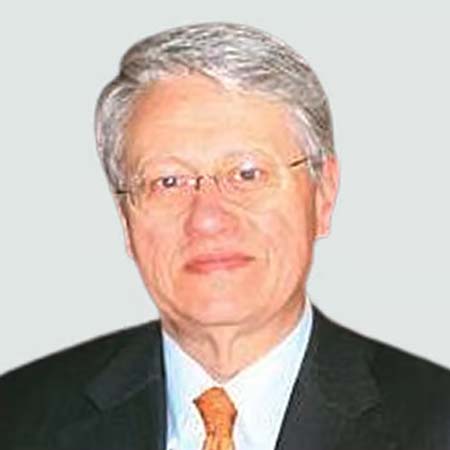
Justice Nicholas G. Garaufis of US District Court of Eastern District of New York.
The court categorized these corporate statements as “inactionable puffery.” It concluded that broad declarations about a “zero tolerance” policy toward corruption are general corporate assurances rather than specific, factual representations that a reasonable investor would rely upon to make investment decisions.
However, the judge firmly rejected several other arguments brought forward by the DOJ. These included claims that the case was predominantly foreign, that investors suffered no financial loss, that Indian authorities found no actionable misconduct, and that the defendants were unlikely to appear in a US court.
READ: Defence Minister Calls for Military-Civil Integration to Tackle Modern Security Challenges
Scrutiny of Indian Judicial Decisions and Remaining Defendants
The DOJ had argued that Indian authorities had already investigated the allegations and found nothing wrong, citing three specific decisions: a Competition Commission of India ruling, a Delhi High Court public interest litigation, and a Bombay High Court petition.
Upon closer examination, Judge Garaufis noted that none of these documents were the result of formal investigations. Instead, they were decisions not to investigate private complaints, and none of them addressed the core issue of alleged false representations made to lenders and investors in the United States.
The legal battle is not entirely over for everyone involved. The court reserved its decision on the DOJ’s request to drop FCPA conspiracy and obstruction charges against several other defendants, including Ranjit Gupta, Cyril Cabanes, Saurabh Agarwal, Deepak Malhotra, and Rupesh Agarwal. The DOJ has been ordered to provide proper supporting material and reasons for dismissing those remaining counts by August 31.
READ: Gameskraft vs. ED: Karnataka HC Rejects Arguments Shielding Administrative Documents From Scrutiny
READ: India Unveils First Indigenous Expendable Turbo Jet Engine of 350 kg Thrust Class