
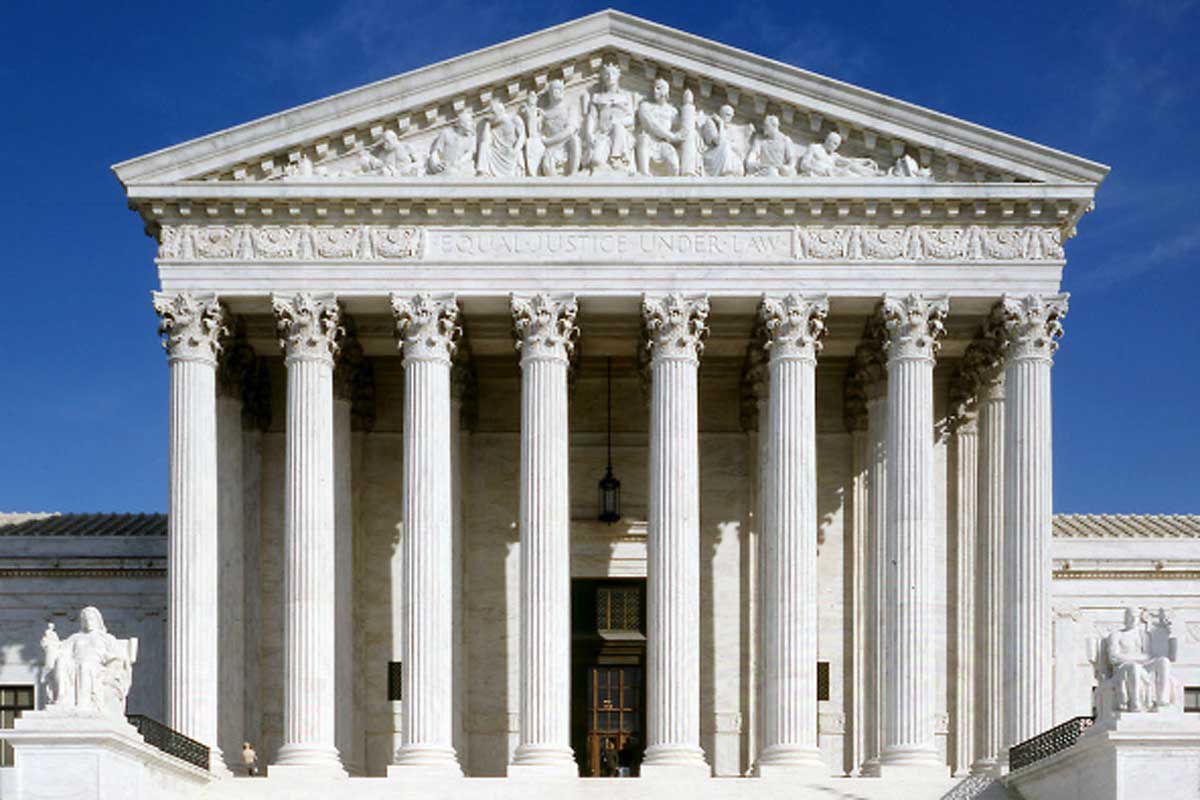


US Supreme Court Birthright Citizenship Ruling: The United States Supreme Court has delivered a major ruling on immigration, deciding in a 6-3 vote that babies born on U.S. soil are automatically American citizens. This decision officially rejects an attempt by Donald Trump to end the country’s 150-year-old policy of birthright citizenship through an executive order.
The ruling is a significant setback for Trump’s immigration platform and a massive victory for civil rights organizations that have fought to protect the long-standing legal tradition.
The Core of the Debate: The 14th Amendment
At the heart of this case is the 14th Amendment of the U.S. Constitution, which was passed in 1868 shortly after the American Civil War. It was originally written to guarantee that newly freed slaves were recognized as full U.S. citizens.
The amendment states that:
“All persons born or naturalized in the United States, and subject to the jurisdiction thereof, are citizens of the United States.”
The Trump administration challenged the phrase “subject to the jurisdiction thereof.” It argued that this language should exclude the children of undocumented immigrants or temporary visitors, claiming these parents do not owe full allegiance to the United States.
However, the Supreme Court majority completely disagreed.
How the Justices Voted
Chief Justice John Roberts of the US Supreme Court led the majority, writing that children born in the U.S. to parents who are unlawfully or temporarily present are “citizens at birth” under the Constitution.
“Citizenship, then and now, was the right to have rights—to freely participate in our political community,” Chief Justice Roberts wrote. “The Framers of the Fourteenth Amendment extended that promise to ‘every free-born person in this land.’ We keep that promise today.”
Five of the justices agreed that Trump’s executive order violated the Constitution directly. A sixth justice, Brett Kavanaugh, voted with the majority but wrote a separate opinion stating that the executive order violated federal law rather than the Constitution itself.
On the other side, three conservative justices—Clarence Thomas, Neil Gorsuch, and Samuel Alito—dissented from the ruling. Justice Alito called the decision a “serious mistake,” arguing that it grants citizenship to almost anyone born in the country, including those who travel to the U.S. purely to give birth before returning home. Justice Thomas argued the amendment was being twisted for modern political agendas, noting it was originally meant for people with no allegiance to foreign nations.
READ: Modernization Commander: General Dhiraj Seth Takes Charge of the Indian Army.
The Political Backlash and Celebration
The ruling sparked immediate and intense reactions from both sides of the political spectrum.
Donald Trump took to his social media platform, Truth Social, calling the decision “too bad” and urging Congress to step in. He argued that a complicated constitutional amendment isn’t necessary to fix the issue, stating, “Congress should today start work on ending expensive, and unfair to our country, birthright citizenship” through new legislation.
White House Chief of Staff Stephen Miller expressed even stronger disapproval on X, calling it “one of the most destructive and outrageous decisions” in the history of the court, adding that “American citizenship is not the birthright of the world.”
Meanwhile, Democrats and civil rights advocates celebrated the decision as a triumph for constitutional law. House Democratic Leader Hakeem Jeffries stated that the court “finally affirmed that all persons born in the United States are American citizens. There is, and shall be, no question.”
Dariely Rodriguez, chief counsel at the Lawyers’ Committee for Civil Rights Under Law, echoed that relief, noting that the decision solidifies a truth Americans have relied on for over a century: “Anyone born on American soil, regardless of the legal status of their parents, is born an American citizen.”
Don’t Miss: Adani Airport City Will Develop 6 Airport Cities with a Rs 20,000 Crore Investment
Don’t Miss: End of the Pricing Shell Game: India Mandates Uniform Pack Sizes and Weight Tags for Edible Oils