
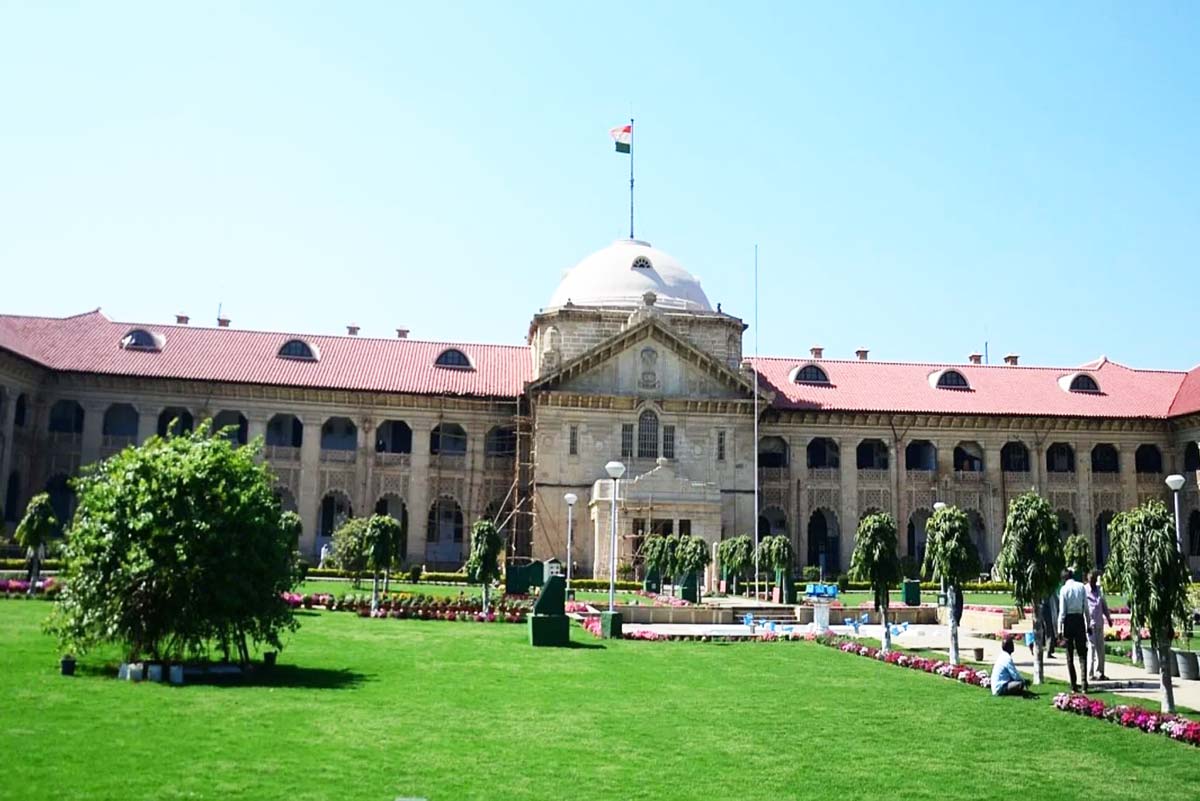


Allahabad High Court Uttar Pradesh Tenancy Act 2021: Property owners and tenants across Uttar Pradesh are navigating a major legal shift following a landmark ruling by the Allahabad High Court. In a decision that highlights the delicate balance between state legislation and central laws, the High Court has struck down several core sections of the Uttar Pradesh Regulation of Urban Premises Tenancy Act, 2021.
The ruling, delivered by a Division Bench comprising Justice Saumitra Dayal Singh and Justice Swarupama Chaturvedi, centers on a batch of petitions challenging how the state law handled rent revisions, dispute resolutions, and eviction procedures.
Why the Court Struck Down the Rules
At the heart of the legal challenge was the doctrine of repugnancy under the Indian Constitution. The 2021 Act dealt with subjects falling under the concurrent list—areas where both Parliament and state legislatures can make laws. However, when a state law conflicts with an existing central law on the same subject, it requires specific, prior Presidential assent to hold weight.
The High Court found that the Uttar Pradesh legislature had bypassed this crucial requirement. Specifically, the bench declared Sections 8, 9, 10, 38, and 42 of the 2021 Act ultra vires (beyond the legal power or authority of the legislature).
The Clash Over Rent and Eviction
Sections 8, 9, and 10 of the state law dealt heavily with how rent could be paid and revised. The Court observed that these provisions permitted upward rent revisions at specified rates and allowed authorities to determine revised rent during disputes.
This, the judges noted, directly conflicted with the central Transfer of Property Act, 1882, which does not allow a lessor to unilaterally enhance rent outside the terms agreed upon by both parties in a lease deed.
Furthermore, the state law introduced broader grounds for eviction—such as non-payment, structural repairs, rebuilding, or personal need by legal heirs of a deceased landlord—that went beyond what was established under traditional general law. The court pointed out that these changes created entirely new rights and liabilities for landlords and tenants that clashed with Chapter V of the Transfer of Property Act.
READ: INS Mangrol: Indian Navy Gets Delivery of Anti-Submarine Warfare Shallow Water Craft
Procedural Overreach and Special Tribunals
Beyond substantive property rights, the 2021 Act also tried to overhaul how disputes were settled by creating specialized Rent Authorities and Rent Tribunals.
Sections 38 and 42 attempted to override the standard procedures laid down in the Provincial Small Causes Court Act and the UP Civil Laws (Amendment) Act. The High Court ruled that creating these parallel forums without prior Presidential assent created clear procedural repugnance.
READ: India’s Cement Sector Sees Major Shakeup as Dalmia Takes Over 5.75 MTPA Capacity
What This Means for Existing Agreements
While the ruling invalidates these specific chapters moving forward, the judiciary has built in safeguards to prevent immediate chaos in the rental market.
The Allahabad High Court has explicitly protected legal proceedings that have already concluded under the 2021 Act where the validity of the provisions was not challenged. Additionally, rent agreements and revisions that were already processed and completed under the framework of the state law remain safe.
As legal teams digest the nuances of the judgment, the ruling serves as a stark reminder that state-level housing reforms must carefully harmonize with established central statutes.
Don’t Miss: Registered Will Is Not Automatically Valid: Supreme Court Clarifies Proof Requirements
Also Read: India Boosts Army Firepower with Rs 1,577 crore Loitering Munition Deal