
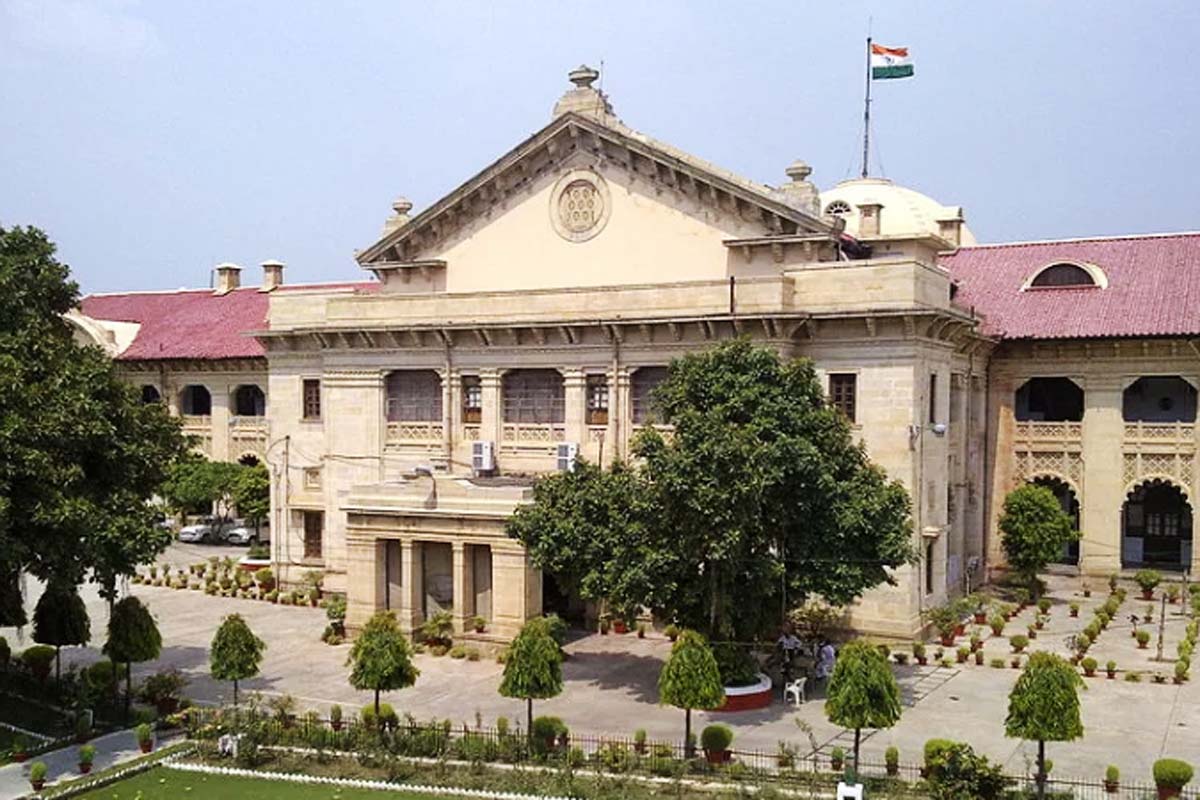


The Allahabad High Court has recently raised important questions about the practice of giving judicial responsibilities to administrative officers. In a case titled Amar Singh Yadav v. State of UP and Others, a bench consisting of Justices JJ Munir and Indrajeet Shukla examined how cases are handled when administrative officials also act as judges. The judges noted that the entrustment of judicial duties to administrative officers, who preside over cases according to their convenience, was not a good idea.
The court was looking into a specific petition where a case filed under the Maintenance and Welfare of Parents and Senior Citizens Act, 2007, had been pending before the Sub-Divisional Officer in Kanpur Nagar for a long time without any final orders being issued. When asked about the delay, the Sub-Divisional Magistrate explained that the hearing could not take place over a three-week period in July because of heavy administrative duties.
The bench made it clear that they were not impressed with this explanation. Highlighting the need for proper structure in legal proceedings, the court stated that judicial work has a certain discipline. The foremost is the time schedule of the court sitting. It cannot be haphazard and according to the convenience of the presiding officer. Furthermore, the court emphasised that if judicial functions are conferred upon administrative officers, they must dispose of their judicial work first before taking up any administrative duties.
READ: India Signs Thirty-Month Lease Agreement With General Atomics for MQ-9B Sea Guardian
Policy Matters and Professional Judges
While the court offered strong criticism regarding how these dual roles are managed in practice, the judges also acknowledged that the decision to give judicial powers to administrative officers falls within the policy-making domain of the State government. Even so, the bench took the opportunity to suggest a better long-term approach for the justice system.
Sharing its perspective on how the system should ideally function, the court remarked, “We would again emphasize that matters such as these should be considered by the State to be entrusted to trained and professional Judges, who are not burdened with administrative duties and have a regular time schedule devoted entirely to judicial work.”
Court Directions and Next Steps
To address the delayed case brought forward by the petitioner, who was represented by advocate Nikhil Pandey, the High Court issued clear instructions to the local official. The Sub-Divisional Magistrate was directed to resolve the matter quickly by scheduling hearings three days every week. Additionally, the officer must inform the High Court about the progress of the proceedings by September 15.
Don’t Miss: Gameskraft vs. ED: Karnataka HC Rejects Arguments Shielding Administrative Documents From Scrutiny
Also Read: Clean Energy Boost: Adani Energy Solutions Raises ₹3,500 Crore From Institutional Investors