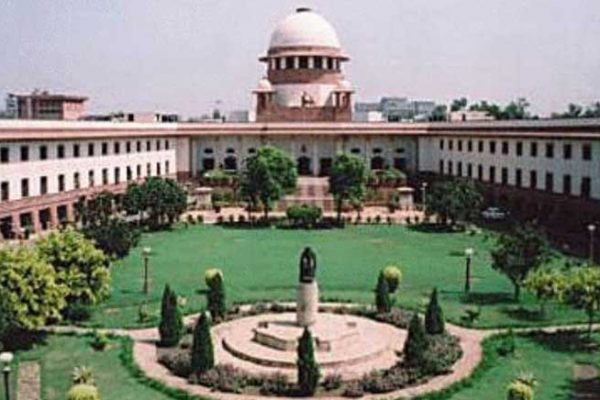




In a significant legal blow to the opposition, the Supreme Court of India on Friday dismissed a petition filed by senior Congress leader Meenakshi Natarajan. The plea challenged the rejection of her nomination papers for the Rajya Sabha elections from Madhya Pradesh.
A vacation bench comprising Justice P.K. Mishra and Justice A.S. Chandurkar anchored its decision in firmly established constitutional law. The top court ruled that judiciary-led interventions cannot disrupt an ongoing electoral process, clarifying that the petitioner’s proper legal recourse lies exclusively in filing a post-election petition.
The central axis of the Supreme Court’s dismissal rested on the constitutional boundaries governing Indian elections. Delivering the order, the bench noted that the legal framework concerning election-related disputes remains fully settled: once the electoral machinery is set in motion, ordinary writ jurisdictions are paused.
“Whenever an attempt has been made to invoke the jurisdiction of this Court under Article 32, or that of the High Courts under Article 226, during the process of elections, this Court has repeatedly declined interference, having regard to the constitutional mandate contained in Article 329(b) of the Constitution,” the Bench observed.
The political and legal firestorm trace back to June 9, when Arvind Sharma, the Returning Officer (RO) and Madhya Pradesh Assembly Principal Secretary, officially disqualified Natarajan’s nomination.

Justice Prashant Kumar Mishra, Supreme Court of India.
The courtroom witnessed a sharp jurisprudential debate over what legally constitutes a “pending criminal case” requiring public disclosure.
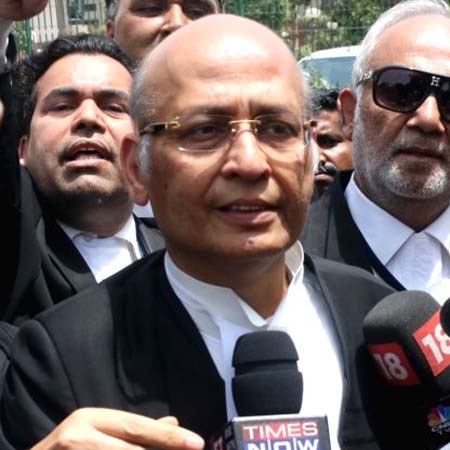
Dr. Singhvi argued that the RO’s interpretation of Section 33A of the Representation of the People Act, 1951, was legally unsustainable. He maintained that no actual criminal case existed against Natarajan in the eyes of the law because the Hyderabad magistrate had merely issued a pre-cognizance notice and had not yet officially taken cognizance or framed charges.
Countering the Congress’s stance, Senior Counsel Mukul Rohatgi and D.S. Naidu, appearing for the BJP candidates and the Election Commission respectively, argued that the disclosure mandate is absolute. They contended that Form 26 requires a blanket disclosure of all ongoing legal proceedings involving a candidate, regardless of whether charges have been officially framed.
Furthermore, Rohatgi noted that the right to contest an election is a statutory privilege rather than a fundamental right, meaning a writ petition under Article 32 to enforce fundamental rights was fundamentally unmaintainable in this context.
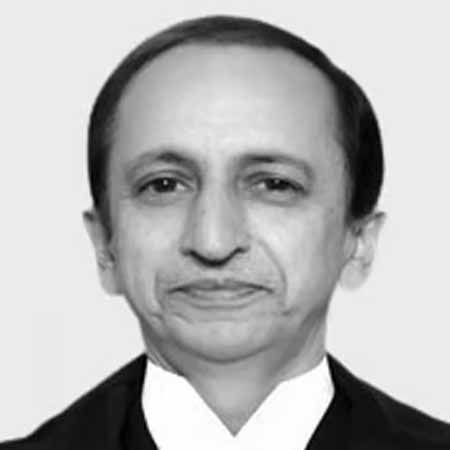
Justice AS Chandurkar, Supreme Court of India.
Though Solicitor General Tushar Mehta appeared on behalf of the State of Madhya Pradesh to emphasize the “seminal legal importance” of how election laws are interpreted, the court declined to allow the state’s active intervention, ruling the local government had no direct stake in the parliamentary election process.
While the Supreme Court clarified that its observations were strictly limited to determining the maintainability of the immediate writ petition—leaving Natarajan entirely free to mount a full challenge via an election petition before the Madhya Pradesh High Court in the future—the immediate political reality remains unchangeable.