
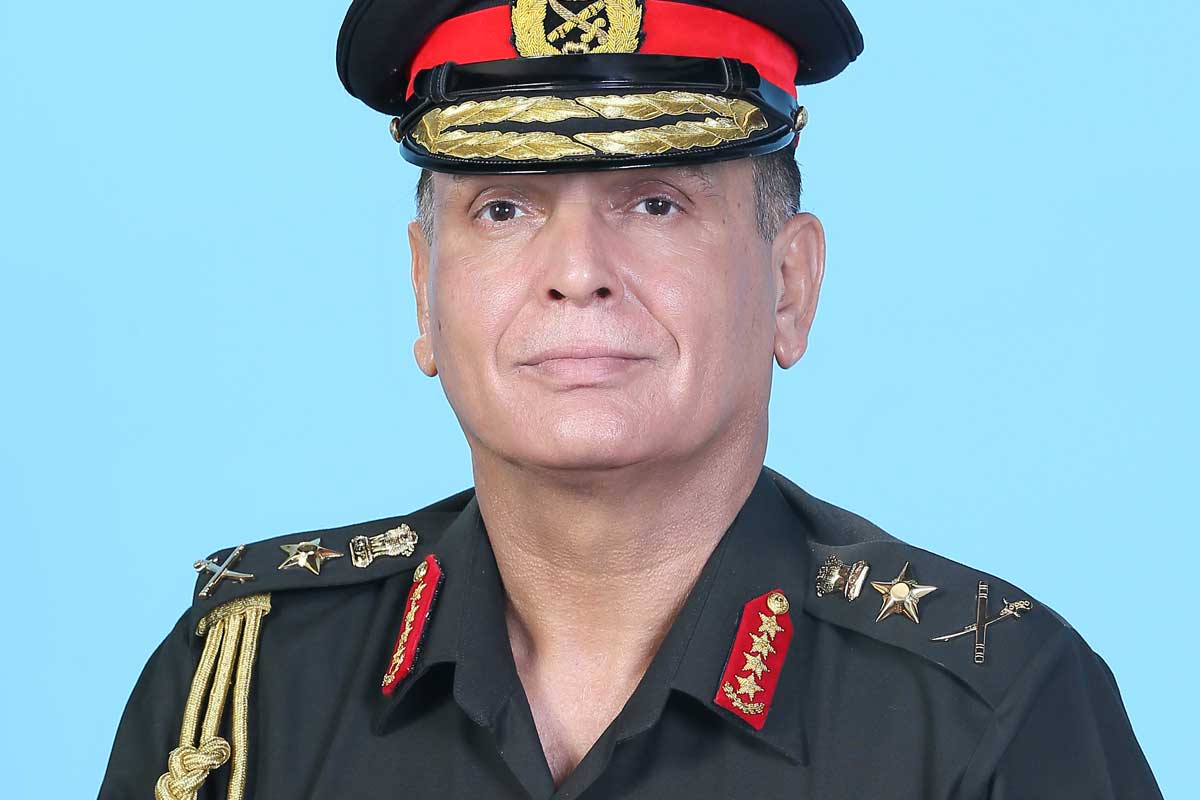


Chief of Army Staff General Dhiraj Seth: A major transition in leadership has taken place at the highest level of the Indian military. General Dhiraj Seth has officially taken charge as the 31st Chief of the Army Staff (COAS). He succeeds General Upendra Dwivedi, who stepped down after a distinguished career spanning over 40 years of service to the country.
For everyday citizens, the change in leadership at the top of the Army is a pivotal moment, influencing everything from national defense strategy to how the country adapts to modern warfare.
Here is a breakdown of who the new Army Chief is, his extensive background, and what his leadership means for the future of India’s defense.
A Career Built on the Frontlines
General Dhiraj Seth is a highly decorated military veteran whose career spans nearly 40 years. His journey began at the National Defence Academy (NDA) in Khadakwasla, one of India’s premier military training institutions. In December 1986, he was officially commissioned into the Armoured Corps—the tank and cavalry division of the Indian Army.
Over the decades, General Seth has commanded troops across a wide variety of challenging terrains and environments. This hands-on experience is critical for any Army Chief, as it ensures they understand the ground realities faced by soldiers. His past commands include:
The Desert Sector: Leading an Armoured Regiment in India’s arid border regions.
The Western Theatre: Commanding an Armoured Brigade in a highly strategic zone.
Jammu & Kashmir: Overseeing a Counter-Insurgency Force handling internal security and cross-border challenges.
The Strike Formations: Serving as a Lieutenant General for the Sudarshan Chakra Corps, one of the premier offensive strike forces in the country.
In addition to these field roles, General Seth served as the General Officer Commanding for the Delhi Area, a role that balanced military duties with key national and international diplomatic and ceremonial responsibilities.
READ: Two Days, Three Tests: How DRDO Just Upgraded the Nation’s Naval and Missile Defence Shield
Rare Leadership Across Multiple Commands
Before stepping into his current role as the topmost leader of the Indian Army, General Seth achieved a rare distinction in modern military leadership. He served as the head of two different operational commands: the South Western Command and the Southern Command.
For two and a half years, he provided strategic oversight across these massive and distinct theaters of operation. Managing multiple commands gives a leader a macro-level understanding of India’s vast borders, logistics, and regional security challenges, making him uniquely prepared for the role of COAS.
READ: The $22 Million Power-Up: How Kimbal is Rewiring Our Clean Energy Future
The Future of Warfare: Modernization and Strategy
Beyond his time on the battlefield, General Seth is widely recognized within the military community as a forward-thinking strategist. He has spent considerable time at the Army Headquarters working directly within the strategic planning and capability development departments.
Modern warfare is changing rapidly. Today’s conflicts rely heavily on emerging technologies, including drones, cyber security, and advanced surveillance. General Seth’s previous work has focused heavily on aligning the Indian Army’s operational needs with these modern advancements, shaping how the military structures its forces and plans for future battlefield scenarios.
His educational background mirrors this strategic focus. General Seth has consistently topped his professional military courses. He is a graduate of both the Higher Command Course and the National Defence College in India, and he also attended the prestigious Command & Staff Course in Paris, France. This international exposure gives him a global perspective on contemporary military affairs and international defense relations.
As General Dhiraj Seth takes the helm, the Indian Army moves forward under a leader who combines decades of direct combat-zone experience with a clear vision for technological advancement and modernization.
Don’t Miss: Adani Airport City Will Develop 6 Airport Cities with a Rs 20,000 Crore Investment
Don’t Miss: Beyond the Social Media Spat: Supreme Court Issues Final Warning to Karnataka’s Feuding Civil Servants