


India Border Road Organisation (BRO) Strategic Conclave: In an era dominated by satellite-guided missiles, stealth drones, and cyber warfare, it is easy to assume that the future of conflict will be fought entirely in the digital and aerial realms. However, India’s defense leadership has a grounded reminder: you still need a solid road to move a tank, and a secure tunnel to protect a supply line.
Speaking at the Border Roads Organisation (BRO) Strategic Infrastructure Conclave in New Delhi, Defense Minister Rajnath Singh made a compelling case for the physical foundations of national security. While state-of-the-art weapons and high-tech platforms are vital, basic infrastructure like roads, bridges, tunnels, and airfields remain absolutely indispensable.
“Sometimes, the first front of a war is not at the border itself, but on the road that leads our soldiers to the frontline,” Singh remarked. “Therefore, the person who builds that road is as vital a guardian of national security as the soldier who stands at the border.”
Why Physical Roads Matter in High-Tech Warfare
The two-day conclave, which brought together military leaders, policymakers, and industry experts, highlighted a critical shift in strategic thinking. While precision strikes and digital capabilities largely decide modern military supremacy, they cannot function without logistical backing.
High-tech systems require constant maintenance, specialized fuel, and rapid redeployment—all of which depend entirely on the quality of local infrastructure. If a modern artillery unit or missile launcher cannot reach its launching pad due to a landslide or an unpaved pass, its advanced technology becomes useless. In essence, robust roads and bridges act as force multipliers, ensuring that India can quickly project its military power exactly where and when it is needed.
The Tech Evolution of the BRO
Over its 65-year history, the BRO has evolved from a basic road-building agency into a highly specialized strategic infrastructure organization. Tackling some of the most unforgiving terrains on Earth—from the oxygen-depleted heights of Ladakh to the landslide-prone ridges of Arunachal Pradesh—the organization has successfully completed several engineering marvels:
The Atal Tunnel: A critical highway tunnel bypassing the treacherous Rohtang Pass to ensure all-weather connectivity to Lahaul and Spiti Valley.
The Sela Tunnel: Built at an altitude of over 13,000 feet, providing vital all-weather connectivity to Tawang in Arunachal Pradesh.
The Umling La Pass: The highest motorable road in the world, sitting at an astonishing 19,024 feet.
According to Director General Border Roads Lt Gen Harpal Singh, the BRO’s future is heavily focused on technological transformation. The agency is actively incorporating AI-enabled construction monitoring, 3D digital planning tools, and advanced tunneling technologies to build smarter and faster.
READ: Aditya Birla Renewables Acquires Sprng Energy from Shell India in USD 1.8 Billion Deal
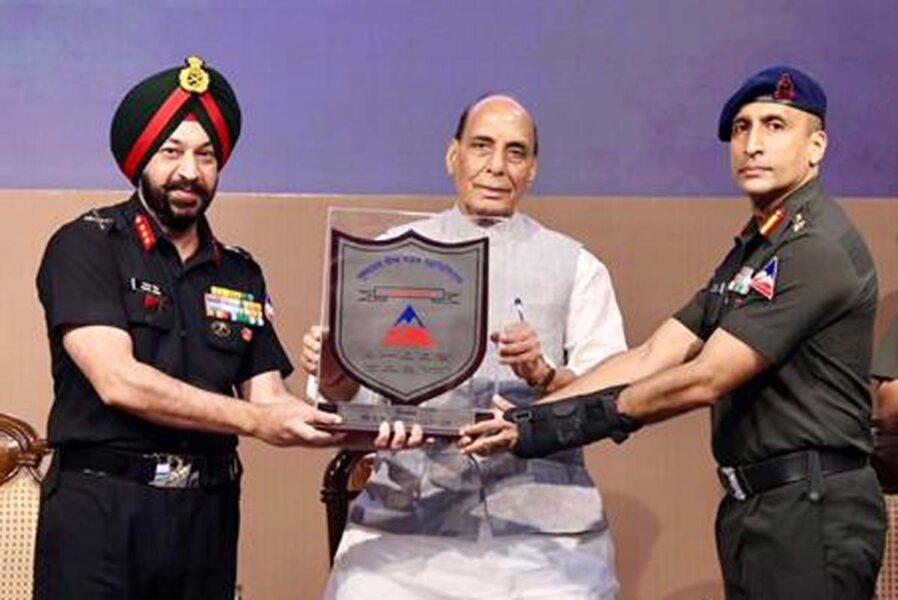
Lt Gen Harpal Singh, DG, BRO (L), with Defence Minister Rajnath Singh (C) at BRO’s Conclave.
Rewriting the Border Narrative: From “Last” to “First”
For decades, border regions were treated as remote outposts, often neglected under the assumption that underdeveloped borders would deter foreign incursions. The current administration has completely flipped this philosophy on its head.
Under the Vibrant Village Programme, India is actively developing its frontier settlements. Instead of viewing these border areas as the “last villages” of the country, the government now officially designates them as India’s “first villages.”
By building high-quality roads, ensuring reliable electricity, and establishing digital connectivity, the government aims to stem migration from these crucial zones. A populated, thriving border village acts as an active eyes-and-ears network for the military, significantly bolstering national security.
Driving Collaboration with Industry and Academia
Developing resilient infrastructure in extreme altitudes requires more than just government effort; it demands a collaborative ecosystem. At the conclave, Rajnath Singh urged private industries, engineering institutions, and administrative bodies to work together.
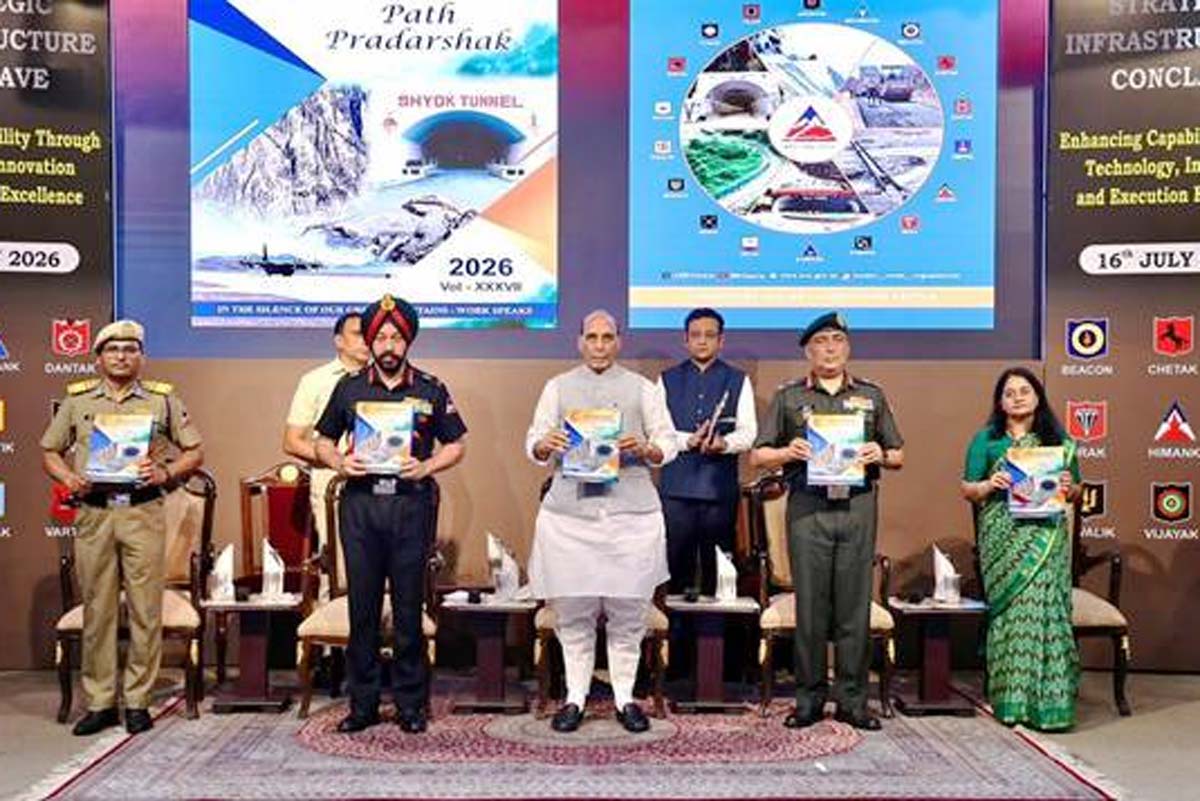
To streamline this cooperative push, the Defense Minister launched two new digital platforms aimed at modernizing BRO’s project management and recruitment processes. He also released three flagship publications—Path Pradarshak, Oonchi Sadken, and Path Vikas—which outline the engineering breakthroughs and future roadmap of the organization.
Ultimately, India’s massive push to secure its borders is about much more than defense. By integrating these remote regions into the national economic fabric, India is building the civilizational and physical pathways required to fuel its long-term growth and secure its sovereignty for decades to come.
Don’t Miss: Inside the Adani Bribery Case: The Legal Twist Holding Up the US Government’s Bid to Drop Charges
Don’t Miss: Paras Hospitals Files for ₹1,800 Crore IPO: What Investors Need to Know