


Government scheme to replace old trucks buses in Delhi: New Delhi: For years, the winter sky over the National Capital Region (NCR) has served as a grim, annual reminder of India’s battle with air pollution. While stubble burning and industrial emissions often dominate the headlines, a silent, year-round culprit has been operating right under our noses: heavy-duty transport.
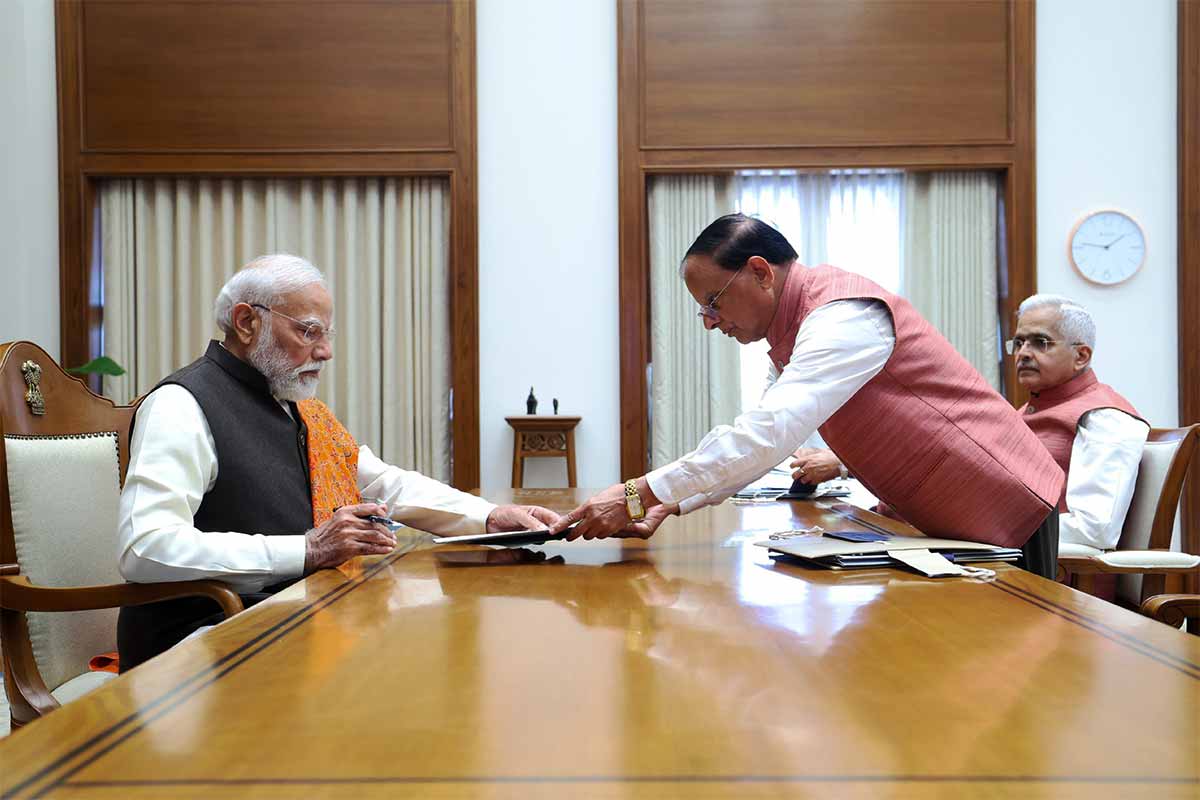
In a decisive move to tackle this systemic crisis, the Union Cabinet, chaired by Prime Minister Narendra Modi, has greenlit a landmark two-year scheme aimed at fundamentally transforming the vehicular landscape of Delhi-NCR. With a massive financial outlay of ₹9,585 crore, the initiative targets the root cause of vehicular toxicity by aggressively replacing old, polluting trucks and buses with modern, eco-friendly alternatives.
Here is an in-depth breakdown of how this scheme works, why it focuses so heavily on large vehicles, and what it means for the future of the capital’s air quality.
The Disproportionate Culprit: Why Trucks and Buses?
To understand why the government is pouring thousands of crores into a seemingly niche segment of transport, one has to look at the data.
According to a definitive 2018 source apportionment study by the Automotive Research Association of India (ARAI) and The Energy and Resources Institute (TERI), the transport sector is responsible for a staggering 63% of Nitrogen Oxide (NOx), 40% of Carbon Monoxide (CO), and 14% of PM 2.5 emissions in the Delhi-NCR zone.
But the most shocking revelation lies within the fleet composition itself:
The 3% Problem: Trucks and buses make up a measly 3% of the total vehicle fleet in Delhi-NCR, yet they generate a disproportionate 36% of the transport sector’s PM 2.5 emissions.
The generational leap in emission standards highlights just how toxic older engines are:
Pre-BS (Bharat Stage) Vehicles: A single pre-BS heavy-duty vehicle spews as much pollution as 14 modern BS-VI compliant vehicles.
BS-IV Vehicles: Even these relatively newer vehicles emit 2.7 times more pollution than their BS-VI counterparts.
By targeting this tiny but hyper-polluting sliver of traffic, the government aims to achieve maximum environmental impact in the shortest possible time.
READ: Union Cabinet Clears Rs 10,000 Crore ATF Price Stabilisation Fund
Funding and Federal Architecture
The execution of this scheme is a masterclass in multi-agency and federal collaboration. It bridges the gap between central policy and state-level execution over a two-year enrolment window.
The Financial Blueprint
The total war chest of ₹9,585 crore is split to balance direct central funding with local tax incentives:
Central Government Contribution: ₹5,041 crore.
State Tax Concessions: An estimated ₹1,601 crore.
Funding Conduit: The National Capital Region Planning Board (NCRPB) under the Ministry of Housing and Urban Affairs (MoHUA).
The Collaborative Matrix
The scheme will be jointly implemented by the Ministry of Road Transport and Highways (MoRTH) and the Ministry of Petroleum and Natural Gas (MoPNG). Crucially, success hinges on the active participation of four distinct administrations: Delhi, Haryana, Rajasthan, and Uttar Pradesh.
How It Works: Scrapping, Selling, and Upgrading
The scheme aims to impact approximately 2.07 lakh vehicles, comprising 1.91 lakh trucks and 16,329 buses currently operating under BS-IV or older emission norms. However, the rules of engagement vary depending on the age of the vehicle and the specific region.
| Vehicle Type / Age | Mandated Action | Replacement Requirement |
| BS-III or Older | Mandatory scrapping at Registered Vehicle Scrapping Facilities. | Must purchase/register a BS-VI (or stricter) vehicle, or an Electric Vehicle (EV) within NCR. |
| BS-IV Vehicles | Can be scrapped OR sold outside the NCR in non-NCAP (National Clean Air Programme) towns. | Must purchase/register a BS-VI (or stricter) vehicle, or an EV within NCR. |
| Delhi Special Mandate | Strict regional rules apply. | Light Goods Vehicles must be 100% Electric. Buses must be BS-VI CNG or Electric only. |
Note: Government-owned vehicles are strictly excluded from participating in this scheme.
The Incentive Package: Sweetening the Deal for Owners
Recognizing that replacing a commercial vehicle is a heavy financial burden for operators, the policy coordinates an aggressive mix of central subsidies, state tax cuts, and manufacturer discounts.
1. Central Government Benefits (Sustained for 5 Years)
Interest Subvention: A 5% interest subsidy on vehicle loans for five years.
Fuel Vouchers: Monthly fuel vouchers worth up to ₹4,800 (varying by vehicle category).
EV Green Incentives: Lump-sum benefits for purchasing electric vehicles or through trading Certificates of Deposit (scrapping certificates).
2. State Government Concessions
Tax Waivers: A complete waiver of registration fees.
Motor Vehicle Tax Cuts: Up to 100% concession for new vehicles and 50% for used vehicles, valid for 10 years.
Clean Slate Policy: State governments will completely waive pending liabilities (such as old penalties or unpaid taxes) on old vehicles entering the scheme.
3. Automobile Manufacturer (OEM) Discounts
Participating automakers are mandated to offer a direct 8% discount on the ex-showroom price of the new vehicle.
READ: DRDO and IAF Successfully Test Indigenous RudraM-II Missile
Eliminating Red Tape: The Digital and Governance Framework
To prevent corruption and delays, the entire lifecycle of the scheme is being digitized. An integrated digital portal will handle everything in real-time, from checking an applicant’s eligibility to automating interest subventions and crediting monthly fuel vouchers. The portal will also track real-time data on air pollution reduction outcomes.
While the enrolment window closes in two years, the central benefits will flow for five years from the date of a vehicle’s registration, ensuring long-term financial viability for transport owners.
Strict Oversight
To ensure the massive budget is utilized effectively, a top-tier Empowered Committee will monitor the rollout. Chaired by the Cabinet Secretary, the committee includes the CEO of NITI Aayog, various union secretaries, and the Chief Secretaries of the participating states. At the ground level, District Magistrates and District Collectors have been given direct responsibility for implementation and monitoring.
The Bottom Line
This scheme represents a shift from purely punitive measures—like banning older vehicles during pollution emergencies—to an incentive-driven model that assists commercial operators in making the green transition. If executed seamlessly across state borders, this multi-billion crore initiative could finally offer Delhi-NCR residents something that has been in short supply for a decade: a breath of fresh air.
Don’t Miss: Dr. AK Panda takes charge as Chairman and Managing Director of SAIL
Don’t Miss: Government Assures Energy Security Amid West Asia Conflict; India Holds 60-Day Crude and Gas Reserves