


Gautam Adani US Court Case: A high-profile legal drama in a New York federal court has taken an unexpected turn. A United States federal judge has publicly questioned the Department of Justice’s (DOJ) sudden push to drop its $250 million criminal bribery case against Indian billionaire Gautam Adani and seven others.
Expressing deep skepticism over the government’s shifting explanations, Judge Nicholas G. Garaufis of the Eastern District of New Yok has demanded a sworn statement from US Attorney Joseph Nocella Jr. to clarify exactly who decided to kill the case and why.
At the heart of the dispute is a delicate timeline involving a proposed $10 billion Indian investment in America, an email rejection, and a subsequent, highly unusual rush by federal prosecutors to walk away from the prosecution.
The Core Contradiction: Who Really Called the Shots?
The conflict centers on an apparent inconsistency in the DOJ’s internal chain of command.
Earlier this month, a high-ranking Washington official, Principal Associate Deputy Attorney General Trent McCotter, filed a letter stating that he was the “final and sole decision maker” behind the DOJ’s request to dismiss the indictment. To support this narrative of centralized decision-making, McCotter noted that he had not asked local US Attorney Joseph Nocella Jr. or any other prosecutor to sign his explanation.
However, defense lawyers subsequently submitted a May 11 email written by Nocella. In the email, Nocella explicitly discussed negotiating the potential terms under which the criminal charges could be resolved, writing that “other grounds” for a resolution were still actively being explored.
Judge Garaufis pointed out that this timeline directly undermines the DOJ’s claim. The email indicates Nocella was intimately involved in negotiating the case’s resolution just a week before the DOJ formally filed its motion to drop the indictment on May 18.
“The representations… appear to directly contradict that claim,” Judge Garaufis wrote, questioning whether the official reasons given to the court represent the “real” and complete reasons the government wants to drop the case.
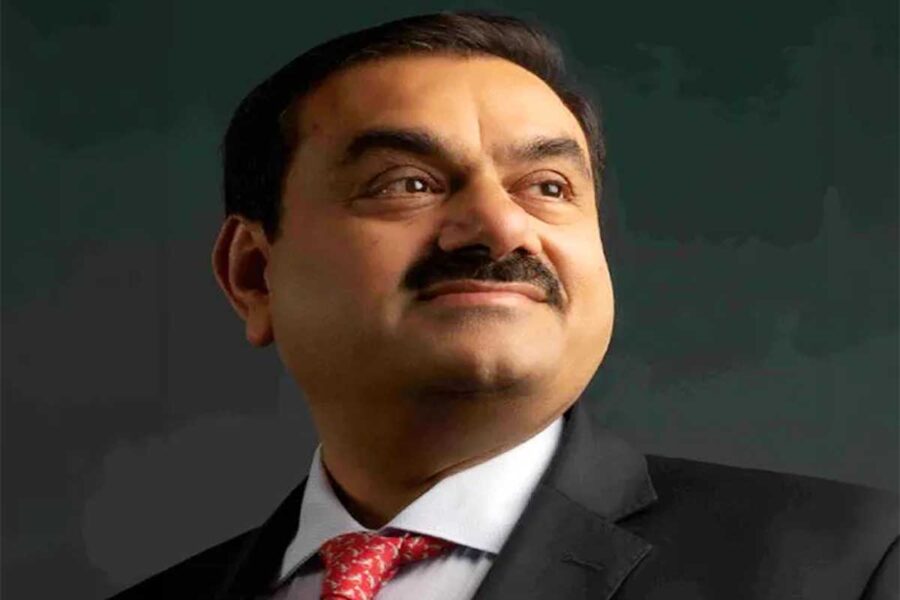
Gautam Adani, Chairman, Adani Group.
The $10 Billion Question
The court’s deeper inquiry centers on a potential “quid pro quo” involving a massive financial pledge.
Shortly after Donald Trump’s election in November 2024, Gautam Adani publicly announced a plan to invest $10 billion in US energy security and infrastructure. During subsequent settlement talks, Adani’s elite defense team—which includes Robert J. Giuffra Jr., the personal lawyer of US President Donald Trump—suggested to federal prosecutors that this $10 billion investment pledge could be codified as part of a formal resolution to resolve the criminal allegations.
Nocella’s May 11 email shows that he “categorically rejected” this proposal, writing that the office would not consider the investment as a factor in dropping the charges.
While both the DOJ and Adani’s team agree the $10 billion offer was rejected, Judge Garaufis is refusing to take these claims at face value without sworn, written declarations. The judge criticized both sides for releasing critical details in a “piecemeal” fashion, noting that each new disclosure has raised more questions than it has answered.
In response to the court’s scrutiny, Gautam Adani submitted a sworn affidavit on July 15. In the filing, the billionaire stated under oath that he had no knowledge of any secret agreements or “quid pro quo” to secure the dismissal of his indictment. He maintained that his original November 2024 investment pledge was made before the criminal charges were unsealed, meaning he was entirely unaware of the active prosecution at the time of the announcement.
READ: Jammu Kashmir High Court Upholds UAPA Charges for Alienating Citizens from India
Why the US Government Wanted to Drop the Case
The original indictment, unsealed in late 2024, accused Adani and his associates of paying more than $250 million in bribes to state government officials in India to secure lucrative solar energy contracts. The US claimed jurisdiction because the defendants allegedly misled American investors and Wall Street institutions while raising capital for the projects.
When the DOJ moved to dismiss the charges in May 2026, it cited “prosecutorial discretion” and a desire to preserve government resources. When pressed by the judge for a more detailed explanation, the DOJ described the case as a “name and shame” indictment pushed through during the final days of the Biden administration without a realistic path to an actual trial.
Furthermore, prosecutors argued that the case was “overwhelmingly foreign in character,” as it primarily concerned Indian nationals allegedly bribing other Indian nationals over Indian power contracts.
What Happens Next?
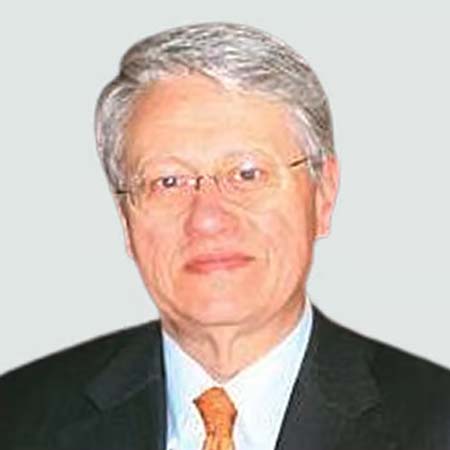
Justice Nicholas G. Garaufis of US District Court of Eastern District of New York.
Judge Garaufis has made it clear that federal courts are not rubber stamps for the Department of Justice. Under US federal court rules, a judge must be fully satisfied that the government’s reasons for dropping an active indictment are genuine and substantial.
To resolve the inconsistencies, the court ordered US Attorney Joseph Nocella Jr. to submit a sworn statement. Nocella must state under oath whether he fully agrees with every ground of dismissal presented by the DOJ, and explicitly clarify whether any other unstated reasons or agreements influenced the government’s sudden decision to walk away from the prosecution.
Don’t Miss: Bharat Dynamics Limited Wins Helina Missile Launcher Order from HAL
Don’t Miss: Vedanta Group Splits into 4 Distinct Corporate Entities