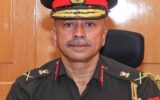

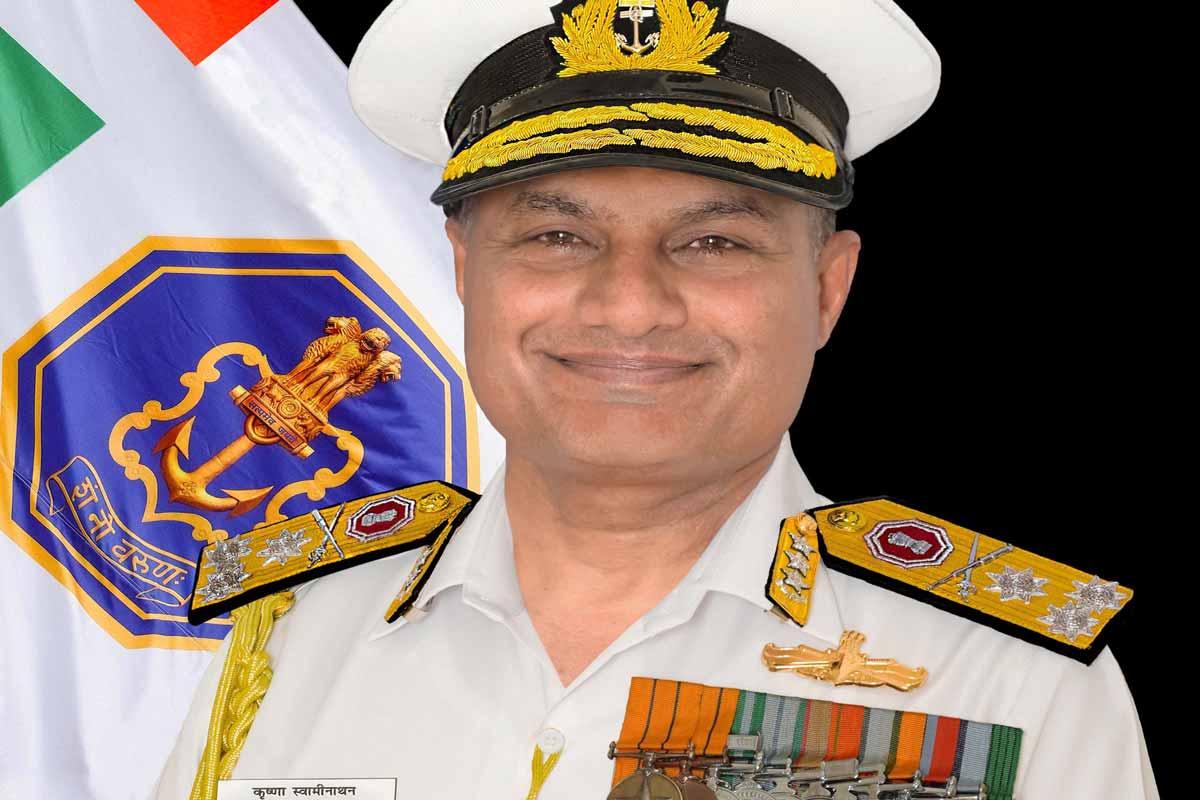


The government has appointed Vice Admiral Krishna Swaminathan as the next Chief of the Naval Staff, succeeding Admiral Dinesh Kumar Tripathi, who is set to retire on May 31, 2026.
A highly decorated naval officer with nearly four decades of experience, Vice Admiral Swaminathan is regarded as one of the Indian Navy’s foremost operational and strategic experts. His appointment comes at a crucial time when India is expanding its maritime footprint in the Indian Ocean Region amid evolving geopolitical and security challenges.
Currently serving as the Flag Officer Commanding-in-Chief of the Western Naval Command, he has previously held several key operational, training, and personnel appointments within the Navy, including Vice Chief of the Naval Staff.
A Career Spanning Combat, Strategy and Training
Commissioned into the Indian Navy on July 1, 1987, Vice Admiral Swaminathan is a specialist in Communication and Electronic Warfare — a field increasingly central to modern naval operations and network-centric warfare.
Over the years, he has commanded some of the Navy’s most important frontline warships and combat platforms. His commands have included missile vessels INS Vidyut and INS Vinash, missile corvette INS Kulish, guided missile destroyer INS Mysore, and the aircraft carrier INS Vikramaditya.
The experience of commanding both missile platforms and an aircraft carrier has given him a rare operational profile within the Navy, combining tactical combat leadership with large-scale maritime force management.
Defence analysts view his diverse command exposure as especially significant at a time when the Navy is focusing on carrier battle groups, maritime surveillance, and integrated theatre operations.
READ: Lt. Gen NS Raja Subramani Appointed as Next Chief of Defence Staff
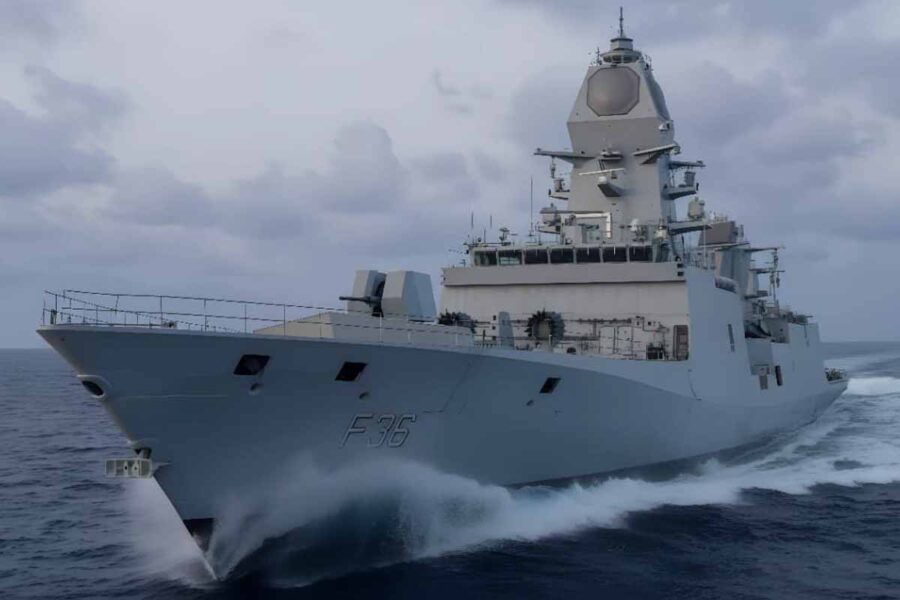
Indian Navy’s INS Dunagiri Stealth Frigate.
Leadership Roles in Modernising the Navy
After his promotion to Rear Admiral, Vice Admiral Swaminathan moved into senior leadership and institutional roles that shaped naval training and operational preparedness.
As Chief Staff Officer (Training) at the Southern Naval Command in Kochi, he played a major role in overseeing training across the Navy. He was also instrumental in establishing the Indian Naval Safety Team, aimed at strengthening operational safety standards across naval platforms and installations.
He later headed the Navy’s Work Up Organisation as Flag Officer Sea Training, responsible for ensuring combat readiness of naval units before operational deployment.
One of the most prominent phases of his career came when he served as Flag Officer Commanding Western Fleet — often referred to as the “Sword Arm” of the Indian Navy. The Western Fleet is India’s principal combat fleet and plays a key role in safeguarding maritime interests in the Arabian Sea and beyond.
Following this assignment, he served as Flag Officer Offshore Defence Advisory Group and Advisor, Offshore Security and Defence to the Government of India, handling matters linked to offshore and maritime security.
READ: SC: Extending Chargesheet Filing Time Without Accused Hearing Violates Right to Liberty
Key Appointments Before Becoming Navy Chief
On promotion to the rank of Vice Admiral, he held several influential appointments at Naval Headquarters and within operational commands.
These included Chief of Staff of the Western Naval Command, Controller of Personnel Services, and Chief of Personnel at Naval Headquarters. Prior to being appointed as head of the Western Naval Command, he served as Vice Chief of the Naval Staff — the second-highest position in the Indian Navy.
His tenure in personnel management and operational planning is seen as giving him a balanced understanding of both force modernisation and human resource development within the service.
Strong Academic and Strategic Credentials
Apart from his operational achievements, Vice Admiral Swaminathan is also recognised for his strong academic and strategic background.
He is an alumnus of the National Defence Academy, the Joint Services Command and Staff College in the United Kingdom, the College of Naval Warfare in Karanja, and the United States Naval War College in Newport, Rhode Island.
His educational qualifications include a Bachelor of Science degree from Jawaharlal Nehru University, an MSc in Telecommunications from Cochin University of Science and Technology, an MA in Defence Studies from King’s College London, an MPhil in Strategic Studies from University of Mumbai, and a PhD in International Studies from the same university.
His blend of operational expertise and academic grounding is expected to help shape India’s maritime doctrine and strategic planning in the years ahead.
READ: Indian Troops Depart for India-Uzbekistan Military Exercise Dustlik
A Critical Appointment Amid Maritime Challenges
Vice Admiral Swaminathan takes over at a time when the Indian Navy is increasingly focused on maritime security in the Indo-Pacific, indigenous warship construction, undersea capabilities, and expanding strategic partnerships with global navies.
His experience across combat operations, training, personnel management, and strategic planning is expected to play a key role in guiding the Navy through a period of rapid technological transformation and growing regional competition.
With India placing greater emphasis on maritime power and securing sea lanes in the Indian Ocean Region, Vice Admiral Krishna Swaminathan’s appointment is being viewed as a continuity of operationally experienced leadership at the top of the Indian Navy.
Don’t Miss: India, Austria Deepen Strategic Ties with Defense, Tech and Business Agreements After Modi–Stocker Talks
Don’t Miss: Bombay High Court Quashes Rs 1,100 Crore MMRDA Demand on Reliance Industries