
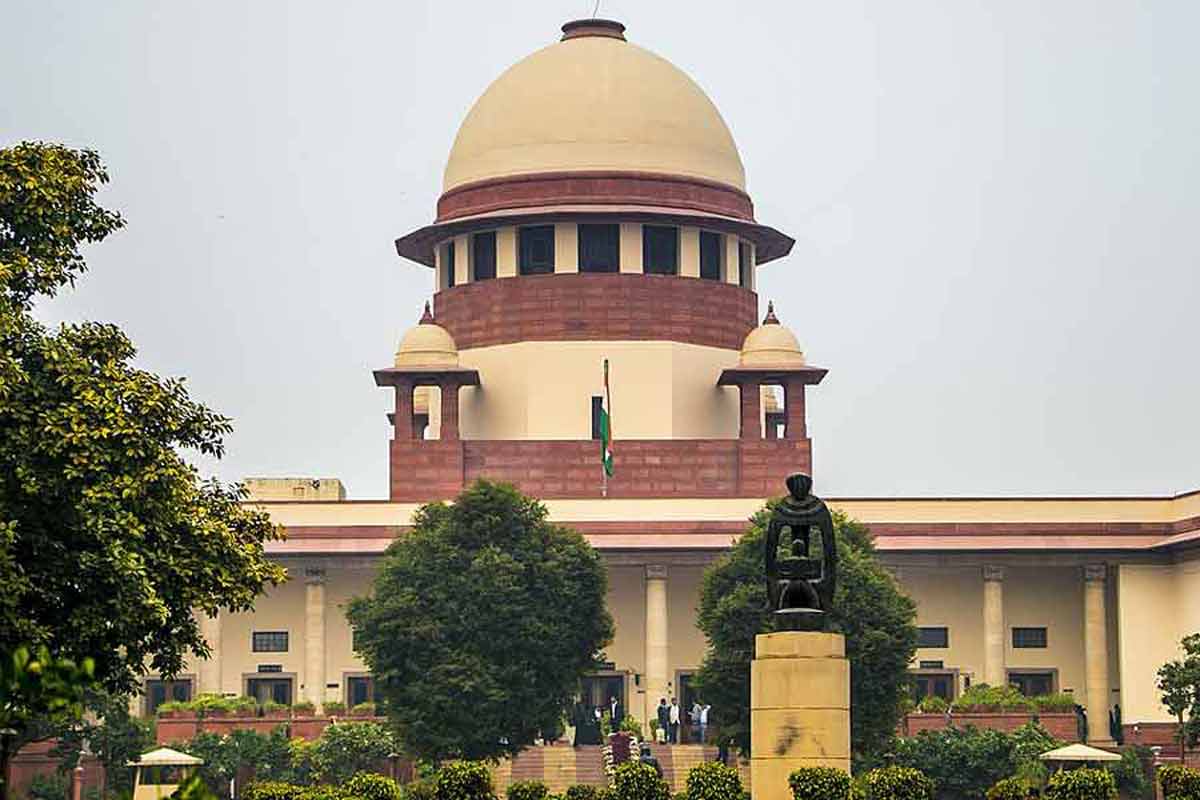
Supreme Court Guidelines 2026 for Senior Advocate Designation: The Supreme Court of India has notified fresh norms governing the designation of Senior Advocates, titled “Guidelines for Designation of Senior Advocates by the Supreme Court of India, 2026.” The new framework replaces the 2023 guidelines in line with the Court’s judgment in Jitender @ Kalla v. State of NCT of Delhi.
The revised guidelines were approved by the Chief Justice of India and all judges at a full court meeting held on February 10.
Points System and Interviews Abolished
In a significant shift, the Supreme Court has done away with the earlier points-based evaluation system and the mandatory interview round.
Under the 2017 framework evolved pursuant to Indira Jaising v. Supreme Court of India, candidates were assessed on a 100-point scale, including:
-
Years of practice (10–20 points)
-
Judgments (40 points)
-
Publications (15 points)
-
Personality and suitability based on interview (25 points)
The process also involved an interview by a Permanent Committee comprising the Chief Justice, two senior-most judges, the Attorney General/Advocate General, and an eminent member of the Bar.
The 2026 guidelines remove both the quantitative scoring system and the interview component entirely.
READ: India Allocates Record Rs 7.85 Lakh Crore for Defence in FY 2026-27
Reconstituted Permanent Committee
The composition of the Permanent Committee has been streamlined. It will now consist only of:
-
The Chief Justice of India (Chairperson)
-
The two senior-most judges of the Supreme Court
This committee, formally titled the Committee for Designation of Senior Advocates, will handle all matters relating to Senior Advocate designation.
READ: IFC Invests Rs 415 Crore in GFL Subsidiary GFCL EV Products Limited
Annual Process with Public Input
The designation process will be initiated at least once every year. Applicants will be given a minimum of 21 days to submit applications, either online or through other approved modes.
Proposals received will be published on the Supreme Court’s official website, and suggestions or views from stakeholders will be invited, enhancing transparency in the process.
The full court also retains the power to designate an advocate suo motu (without application), subject to the advocate’s consent.
READ: ‘Sar tan se juda’ slogan challenges India’s integrity, incites rebellion: Allahabad High Court
Revised Eligibility Criteria
To be eligible, an advocate must:
-
Have at least 10 years’ standing as an advocate, or 10 years’ combined experience as an advocate and District & Sessions Judge or Judicial Member of a tribunal (where qualifications are equivalent to that of a District Judge);
-
Primarily practice in the Supreme Court (with limited concessions for domain experts appearing before specialized tribunals);
-
Be at least 45 years old, unless relaxed by the full court;
-
Not have had an application rejected in the preceding two years or deferred in the preceding one year.
READ: Telangana High Court Quashes Cases Against Tweets Criticizing Congress, Issues Guidelines
Qualitative Assessment Replaces Marks-Based Evaluation
The full court will evaluate candidates based on qualitative parameters, including:
Ability: Knowledge of law, advocacy skills, legal writing, and capacity to critique judicial decisions.
Standing at the Bar: Professional ethics, fairness in court, conduct with judges and peers, mentorship, and pro bono work.
Specialized Knowledge: Expertise in specific branches such as Arbitration, Insolvency and Bankruptcy, Company Law, Intellectual Property Law, and Taxation.
Clean Record: No convictions involving moral turpitude or contempt of court, and no disciplinary punishment by the Bar Council.
READ: Wilmar Acquires 20% Stake in AWL Agri Business from Adani for Rs 7150 Crores
Decision-Making and Review Mechanism
Decisions will be taken by consensus in the full court. Where consensus is not possible, the majority view will prevail. Secret ballot voting may be used in exceptional cases, with reasons recorded.
Applications not favourably considered will be eligible for review after two years.
Former Chief Justices and judges of High Courts may also seek designation by submitting a letter of request to the Committee.
READ: Indus Waters Treaty: India Rejects Arbitration Court’s Ruling, Cites Pakistan’s Terror History
Provision for Recall of Designation
The guidelines provide that the conferment of Senior Advocate designation can be recalled if the advocate is later found guilty of conduct that, in the opinion of the full court, disentitles them from holding the designation.
With these changes, the Supreme Court has moved away from a marks-driven and interview-based system toward a more collective, qualitative evaluation process, aimed at ensuring fairness, transparency, and institutional consistency in the conferment of one of the Bar’s highest distinctions.
READ: Resignation Forfeits Pension, But Gratuity Is a Statutory Right: Supreme Court