
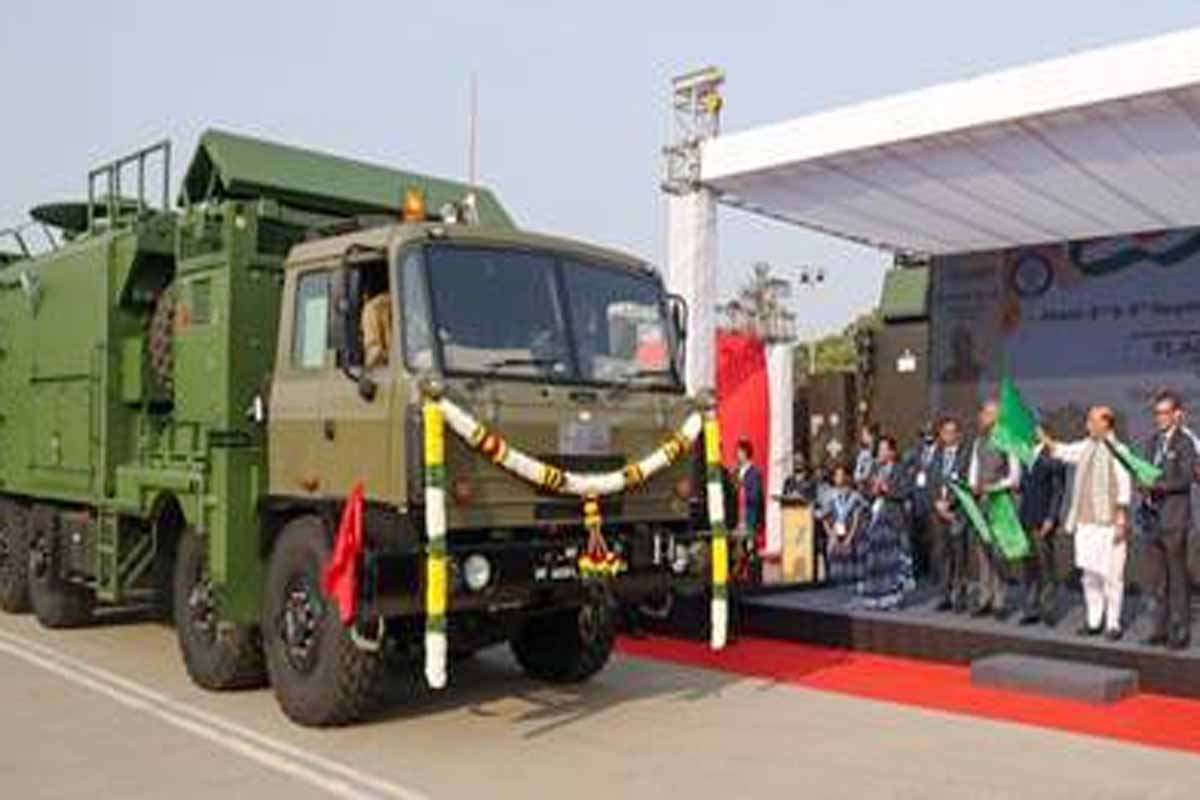


Two New Akash Missile Regiments: Bengaluru, February 16, 2026 – Defence Minister Rajnath Singh, during his visit to Bharat Electronics Limited (BEL) in Bengaluru, inaugurated the state-of-the-art Missile Integration facility at the company’s premises. The occasion also saw the flagging-off of the Akash 3rd and 4th Regiment Combat Systems and the unveiling of the Mountain Fire Control Radar, underscoring India’s commitment to indigenising its defence technologies.
In a significant development for the country’s technological capabilities, the Defence Minister remotely inaugurated the Centre of Excellence for Artificial Intelligence (CoE-AI) in Pune and formally launched BEL’s AI Policy. This move signals a new era of innovation in India’s defence industry, with artificial intelligence set to play a central role in enhancing operational efficiency and capabilities across various domains.
READ: Supreme Court Orders Trial Courts to Inform Accused of Right to Free Legal Aid
Strengthening India’s Technological and Defence Capacities
The Defence Minister was briefed on a wide array of advanced indigenous defence technologies that BEL is developing, including AI-based solutions created by Indian start-ups. The briefing highlighted BEL’s progress in cutting-edge areas such as electronic warfare systems, avionics, naval platforms, electro-optics, and tank electronics. Rajnath Singh commended BEL for its contributions to network-centric operations, noting that the company’s integrated systems, real-time data sharing capabilities, and decision support mechanisms have taken India’s combat effectiveness to unprecedented levels.
“BEL has played a pivotal role in strengthening our network-centric operations. By enabling integrated systems and real-time data sharing, it has significantly elevated the capabilities of our armed forces,” the Defence Minister remarked during the event.
Additionally, Rajnath Singh was briefed about the ongoing research and development (R&D) initiatives at BEL, which are aligned with major national defence programmes such as the Quick Reaction Surface to Air Missile Systems (QRSAM), Light Combat Aircraft Mark II (LCA Mk II), Advanced Medium Combat Aircraft (AMCA), Project Kusha (MR SAM/LR SAM), Counter Drone Systems, and Naval Weapon Control Systems. The briefing emphasized that these indigenous R&D efforts are enhancing operational preparedness across the land, air, naval, and strategic domains, all while reducing India’s reliance on foreign technologies.
Rajnath Singh acknowledged that India’s indigenous air defence and counter-drone systems, particularly those developed by BEL, played a crucial role in neutralising threats during the successful Operation Sindoor. These systems, he said, have demonstrated that India’s indigenous solutions can meet and even exceed global standards.
READ: $10.9 Billion Mega Data Centre Deal: KKR & Singtel Acquire ST Telemedia
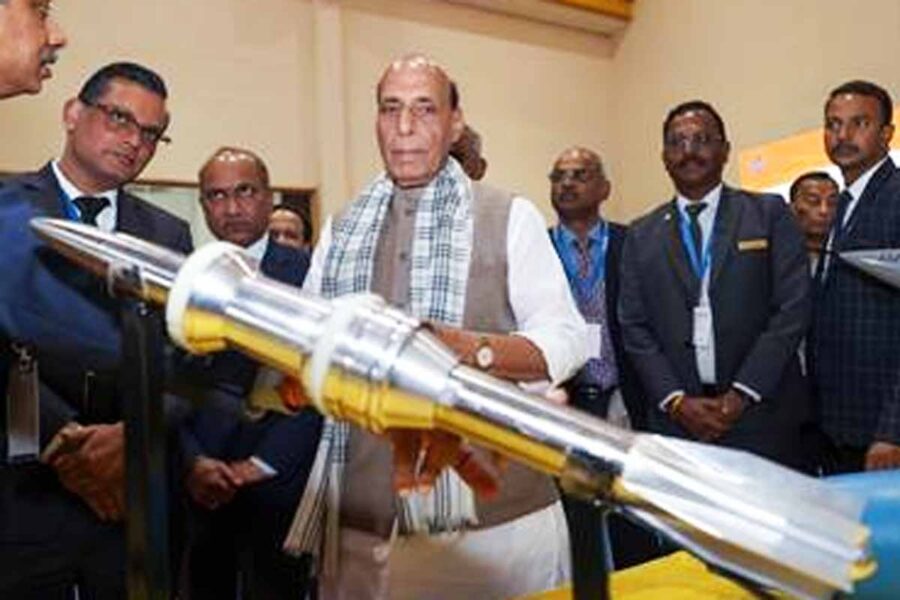 Defence Minister Rajnath Singh at BEL facility in Bengaluru, India. (17 Feb, 2026)
AI and the Future of Defence Technology
During his address, the Defence Minister stressed the growing importance of artificial intelligence and quantum computing, technologies that are no longer just theoretical concepts but are already shaping real-time decision-making, autonomous systems, cyber defence, and precision operations in military settings.
He further highlighted the operational advantages AI brings to the defence sector, especially in areas like early warning, threat prediction, and response mechanisms. “The advancements in AI that are integrated into our defence systems instill operational confidence among our soldiers. They can rest assured that a robust and cutting-edge scientific and engineering ecosystem stands with them,” he added.
The Defence Minister noted that these technological advances in defence technology, particularly AI, were pivotal in providing an edge during operations such as the neutralisation of threats in Operation Sindoor. He pointed out that achieving a self-reliant win, powered by indigenous technologies, imbues the nation with a renewed sense of confidence.
India’s ongoing advancements in AI-driven solutions, such as the automated prediction of enemy threats and AI-based early warning systems, are transforming the battlefield dynamics. As the Defence Minister highlighted, AI’s role in enhancing operational efficiency and decision-making is already making a substantial impact. He also emphasized the need for India’s defence industry to stay ahead in the technology race to achieve the national goal of a “Viksit Bharat” (Developed India).
READ: AIBE Exam: Delhi High Court Rejects Plea Seeking Negative Marking in AIBE
Collaboration and Innovation: The Key to Success
Rajnath Singh urged BEL, other Defence Public Sector Undertakings (DPSUs), and industry partners to stay ahead of the curve by fostering collaboration between the R&D community, start-ups, industry, and academia. He encouraged an agile approach to product development using the latest technologies, particularly in AI and autonomous systems. In line with the government’s vision for a Viksit Bharat, he stressed the importance of prioritising cross-disciplinary collaboration, rapid prototyping, and innovation to create world-class products.
At the event, a showcase of indigenisation initiatives undertaken by BEL’s Central Research Laboratories, Centres of Excellence (CoE) in Electronics Warfare & Photonics, Communications, Radar & Weapon Systems, and the Product Development and Innovation Centre was presented to the Defence Minister. Start-ups and industry partners also exhibited their products, emphasizing the growing involvement of India’s private sector in the country’s defence indigenisation efforts.
Rajnath Singh also interacted with the start-ups and young scientists present at the event. He motivated them to push the boundaries of innovation, encouraging them to develop more advanced indigenous technologies for the defence sector. “The future of our defence lies in the hands of our young innovators. It is important that you continue to innovate and develop technologies that will enhance our self-reliance,” he urged.
READ: Govt Clears Rs 3.6 Lakh Crore Defence Deals for 114 Rafale Jets, P-8I Maritime Patrol Aircraft
Path to Technological Independence
The Defence Minister’s remarks underscored the need for India’s defence industry to move away from foreign dependency and focus on strengthening domestic capabilities. This initiative aligns with the government’s larger goal of reducing dependency on foreign defence imports and accelerating the development of indigenous solutions that are tailored to India’s strategic needs.
With its focus on indigenisation and self-reliance, India aims to become a global leader in defence technology. As Rajnath Singh emphasized, success in this endeavour will not only enhance India’s security but will also provide a strong foundation for the country to emerge as a developed nation.
READ: India Remembers Pulwama Martyrs; PM Says Their Sacrifice Continues to Inspire India
A Vision for a Self-Reliant India
The Defence Minister concluded by reiterating the importance of indigenous defence technology for India’s future. He stressed that the development of AI, quantum computing, and autonomous systems is a crucial part of India’s defence modernization programme. “To become a Viksit Bharat, India must stay at the forefront of technological advancements,” Rajnath Singh said, encouraging BEL and other entities to continue pushing the envelope in developing world-class solutions for the country’s armed forces.
Present at the event were the Secretary of Defence Production, Sanjeev Kumar, Additional Secretary & DG (Acquisition), A. Anbarasu, and Chairman and Managing Director of BEL, Manoj Jain, among other senior officials. Together, they all voiced their commitment to India’s defence self-reliance and to the vision of a strong, technologically advanced nation that can stand its ground in the global arena.
With its focus on indigenous technologies, AI-driven solutions, and innovation, India’s defence sector is poised to not only secure the nation’s borders but also set a global standard for self-reliance in defence technology.