

BIMSTEC Maritime Security Exercise: The Bay of Bengal is emerging as an increasingly important maritime space for South and South-East Asia, connecting economies, facilitating international trade and supporting regional energy and economic security. Against this backdrop, seven BIMSTEC member nations are coming together for a significant new initiative: the inaugural BIMSTEC Maritime Security Exercise, scheduled from 30 October to 3 November 2026.
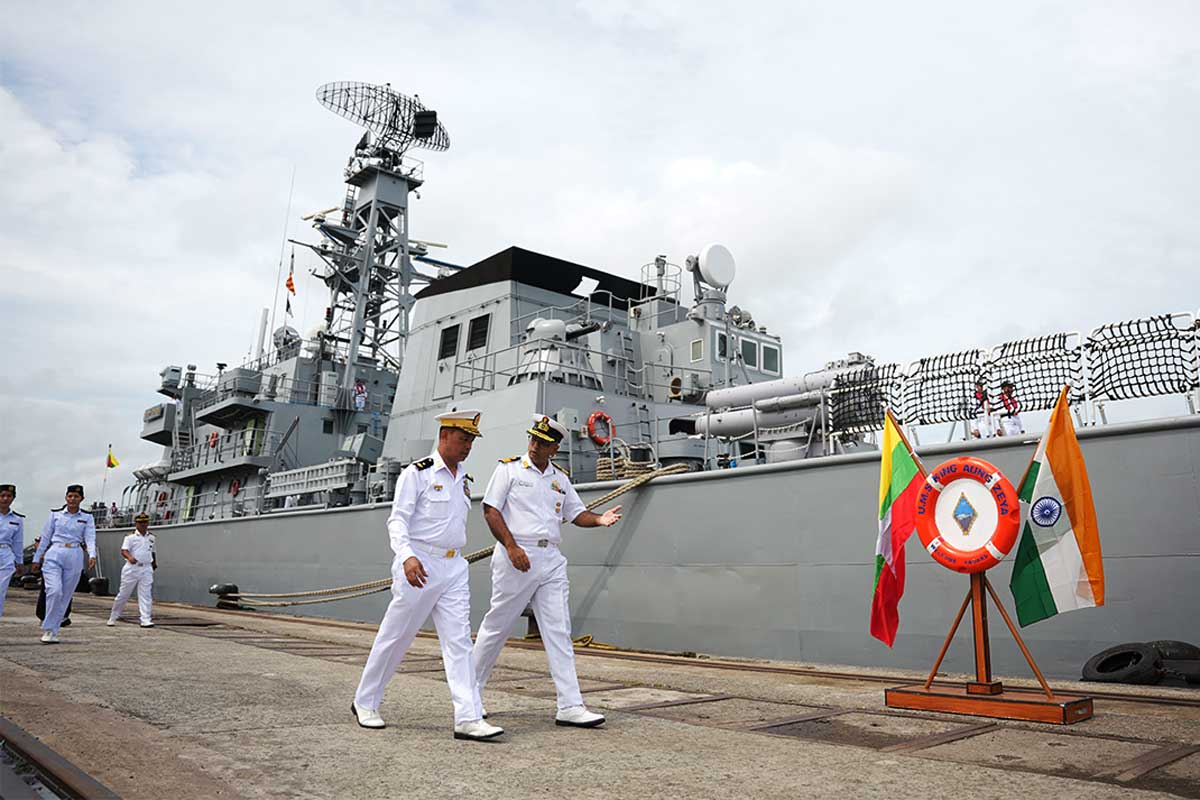
The exercise brings together Bangladesh, Bhutan, India, Myanmar, Nepal, Sri Lanka and Thailand, marking an important step towards strengthening maritime cooperation among countries linked by shared geographical, economic and security interests. More than a military engagement, the initiative represents a collective effort to make the Bay of Bengal a safer, more secure and prosperous maritime region.
Its central message is captured in the theme, “Shared Seas, Shared Security and Shared Prosperity”. At a time when maritime connectivity and regional stability are becoming increasingly important, the exercise seeks to translate diplomatic commitments into practical cooperation on the water.
Why the Bay of Bengal matters
The Bay of Bengal occupies a strategically important position between South Asia and South-East Asia. It connects several major economies and provides vital maritime routes for international commerce, energy transportation and regional connectivity.
For countries surrounding the bay, the sea is not simply a geographical feature. It is an economic lifeline. Commercial shipping, fishing, offshore resources and maritime infrastructure contribute significantly to livelihoods and national development. The security of these waters is therefore closely connected to the economic well-being of the countries in the region.
However, the growing importance of the maritime domain also brings challenges. Disruptions to shipping routes, maritime emergencies, natural disasters and other security threats can affect several countries simultaneously. Since these challenges do not necessarily respect national boundaries, individual countries cannot always address them effectively on their own.
This is where regional cooperation becomes essential. By improving communication, sharing information and developing coordinated operational responses, BIMSTEC members can strengthen their collective ability to safeguard the waters they share.
The inaugural maritime security exercise is designed to contribute to precisely this objective.
BIMSTEC: Turning regional vision into practical action
BIMSTEC, or the Bay of Bengal Initiative for Multi-Sectoral Technical and Economic Cooperation, brings together seven countries from South and South-East Asia. Its membership includes Bangladesh, Bhutan, India, Myanmar, Nepal, Sri Lanka and Thailand.
Although not all its members have direct coastlines along the Bay of Bengal, all have an interest in the region’s stability, connectivity and economic development.
The organisation provides a platform for cooperation across several areas, including trade, transport, energy, technology and security. Maritime cooperation is particularly important because the region’s economic future depends heavily on reliable connectivity and safe sea routes.
The inaugural exercise builds upon the outcomes of the 6th BIMSTEC Summit, held under the theme “BIMSTEC: Prosperous, Resilient and Open”. The summit highlighted the importance of strengthening regional cooperation and building a more connected and resilient Bay of Bengal region.
The maritime exercise provides an opportunity to take those broader commitments forward through practical engagement.
Its significance lies in the shift from policy-level discussions to operational cooperation. While diplomatic agreements establish common objectives, exercises provide opportunities for participating countries to develop working relationships, understand each other’s procedures and improve coordination.
In this sense, the initiative reflects BIMSTEC’s broader ambition of “Translating Vision to Action”.
What does the maritime security exercise aim to achieve?
One of the primary objectives of the exercise is to improve interoperability among participating countries.
Interoperability refers to the ability of different countries’ maritime forces and agencies to work together effectively. This requires more than having ships and aircraft operating in the same geographical area. It involves compatible communication procedures, a shared understanding of operational requirements and the ability to coordinate activities during complex situations.
Another important objective is strengthening maritime domain awareness.
Maritime domain awareness means having a clear and comprehensive understanding of activities taking place in the maritime environment. This includes monitoring vessel movements, identifying unusual activity and sharing relevant information among participating nations.
Better maritime awareness can help countries respond more effectively to security concerns and emergencies. It also improves their ability to protect commercial shipping and maintain stability across important sea routes.
The exercise additionally seeks to strengthen coordination mechanisms and encourage the exchange of best practices.
Such exchanges are valuable because participating countries have different levels of maritime capabilities, operational experience and institutional arrangements. Learning from one another can help improve preparedness and build confidence.
Ultimately, the objective is to develop a more coordinated regional approach to maritime security rather than relying entirely on separate national efforts.
Andaman and Nicobar Islands: India’s strategic advantage
An important geographical and strategic dimension of the exercise is the role of India’s Andaman and Nicobar Islands.
Located in the eastern Indian Ocean, the island chain occupies a strategically significant position close to important international shipping routes connecting the Indian Ocean and the wider Indo-Pacific region.
Its location gives India an important vantage point for monitoring maritime activity and supporting regional security operations.
The islands are particularly relevant because of their proximity to critical sea lanes of communication. These routes carry substantial volumes of international trade and are essential to the economic interests of countries across Asia.
India’s Andaman and Nicobar Command (ANC) plays a significant role in this maritime environment.
Established as India’s first integrated tri-service command, the ANC brings together elements of the Indian Army, Navy and Air Force under a unified command structure. This integrated arrangement supports a coordinated approach to maritime operations and regional security.
Its responsibilities and capabilities extend beyond conventional maritime surveillance. They include humanitarian assistance and disaster relief, search and rescue operations, and regional engagement.
These functions are especially important in the Bay of Bengal, a region vulnerable to cyclones, severe weather events and other natural disasters.
During emergencies at sea, the ability to coordinate surveillance, transportation, rescue and relief operations can make a significant difference. The Andaman and Nicobar Command’s geographical position and integrated capabilities make it an important component of India’s contribution to regional maritime security.
Its role also highlights how geographical advantages can support wider regional cooperation.
READ: SCO Meeting: Defence Minister Rajnath Singh Calls for Unified Action Against Terrorism
Maritime security and economic prosperity go hand in hand
The exercise also underlines an important reality: maritime security and economic development are closely connected.
Safe sea routes encourage trade, strengthen investor confidence and support the movement of goods and energy resources. For countries dependent on maritime commerce, disruptions can have consequences far beyond the immediate location of an incident.
A more secure Bay of Bengal can therefore support stronger regional connectivity and economic integration.
Cooperation is equally important in responding to humanitarian emergencies. Maritime accidents, natural disasters and search-and-rescue situations often require resources and coordination that extend beyond the capabilities of a single country.
Developing relationships between maritime agencies before an emergency occurs can make responses faster and more effective when the need arises.
The BIMSTEC exercise offers an opportunity to strengthen these relationships and promote a shared understanding of regional responsibilities.
READ: India’s Air Force Turns to Homegrown Firefighting Robots for High-Risk Emergencies
A new chapter in Bay of Bengal cooperation
The inaugural BIMSTEC Maritime Security Exercise represents an important milestone in the organisation’s evolving regional security agenda.
Its larger significance goes beyond the five-day engagement scheduled from 30 October to 3 November 2026. It provides a platform for seven countries to strengthen operational relationships, improve maritime awareness and develop greater confidence in working together.
The success of such initiatives will ultimately depend on whether cooperation continues beyond individual exercises. Regular engagement, information sharing, institutional coordination and sustained dialogue will be essential to building a durable regional maritime security framework.
For the BIMSTEC countries, the shared waters of the Bay of Bengal represent both an economic opportunity and a collective responsibility. Protecting this maritime space requires cooperation that recognises the interests and capabilities of every member state.
By bringing the seven nations together under the principle of “Shared Seas, Shared Security and Shared Prosperity”, the inaugural exercise sends a clear message: regional stability cannot be achieved in isolation.
A secure, open and inclusive Bay of Bengal is in the common interest of all its surrounding nations. The exercise is a practical step towards making that shared vision a reality.
Don’t Miss: Airubs delivers 32 new satellites to Eutelsat OneWeb Constellation
Also Read: From French Fighter to Indian Aircraft Carrier: The Strategic Importance of Rafale Marine