
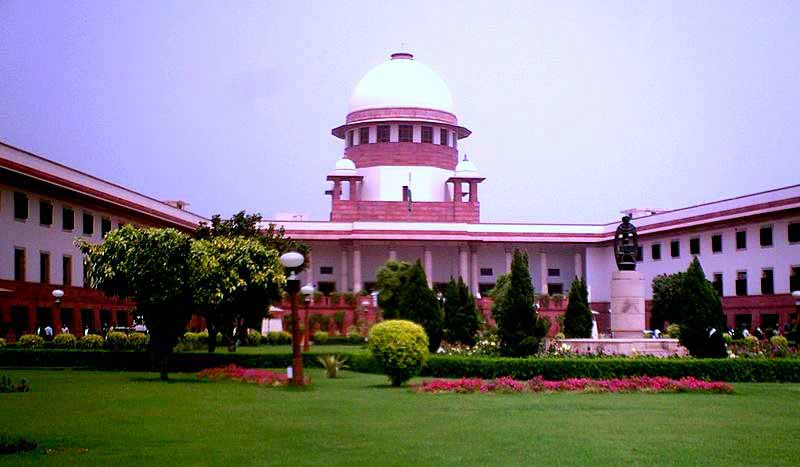


Supreme Court Case Law on Gratuity Payments in India: New Delhi, December 9, 2025 — The Supreme Court on Monday delivered a significant ruling clarifying the legal distinction between resignation and voluntary retirement, holding that resignation leads to forfeiture of pensionary benefits, while gratuity remains a statutory entitlement even after resignation.
A Bench of Justice Rajesh Bindal and Justice Manmohan partly allowed the appeal filed by the legal heirs of a former Delhi Transport Corporation (DTC) employee, denying their claim for pension but directing payment of gratuity and leave encashment with interest.
The case arose from the resignation of Ashok Kumar Dabas, a DTC conductor appointed in 1985, who resigned from service in 2014 after nearly 29 years, citing family reasons. His resignation was accepted by the employer, and a subsequent request to withdraw it was rejected. Following his death, his legal heirs sought pensionary benefits, which were denied by the employer, the Central Administrative Tribunal, and the Delhi High Court, prompting an appeal to the Supreme Court.
Pension forfeited on resignation
The Court examined Rule 26(1) of the Central Civil Services (Pension) Rules, 1972, which provides that resignation from service entails forfeiture of past service unless the resignation is permitted to be withdrawn in public interest. Since Dabas’s resignation was neither withdrawn nor treated as being in public interest, the Court held that pension could not be granted.
Rejecting the argument that the resignation letter should be construed as a request for voluntary retirement, the Bench said such a reclassification would undermine the clear legal framework.
“If this Court were to reclassify his resignation as a case of voluntary retirement, this would obfuscate the distinction between the concepts of resignation and voluntary retirement and render the operation of Rule 26 nugatory,” the judgment stated.
Relying on its earlier decision in BSES Yamuna Power Ltd. v. Ghanshyam Chand Sharma (2020), the Court reiterated that the difference between resignation and voluntary retirement is one of legal consequence, not mere form, and that even long years of service cannot override Rule 26 once resignation is accepted.
READ: Telangana High Court Quashes Cases Against Tweets Criticizing Congress, Issues Guidelines
Gratuity upheld as a statutory right
On the issue of gratuity, however, the Court took a markedly different view. It held that gratuity is governed by the Payment of Gratuity Act, 1972, a social welfare legislation that operates independently of pension rules.
Under Section 4 of the Act, gratuity is payable to an employee who has completed five years of continuous service, including in cases where service ends due to resignation. The Court noted that DTC failed to establish that it was exempt from the Act under Section 5.
“Once it could not be established by the respondent that the 1972 Act is not applicable to the Corporation, the claim of the appellant for release of gratuity cannot be denied even if he had resigned from service,” the Court held.
The Bench directed payment of gratuity with interest at 6 per cent per annum from the date of resignation until actual payment.
READ: Punjab and Haryana High Court Orders CBI Probe into Bribery Involving Judges and Advocates
Leave encashment also allowed
The Court also ordered payment of leave encashment, after counsel for DTC conceded that there was no legal bar to releasing the amount. Interest at the same rate was directed to be paid to the deceased employee’s family.
Misconduct not a bar to gratuity
DTC had argued that the employee’s past service record, which included suspensions, warnings and stoppage of increments, should be considered while denying benefits. The Supreme Court rejected this contention, holding that in the absence of a statutory provision permitting forfeiture, prior misconduct cannot be used to deny gratuity once the conditions under the Gratuity Act are fulfilled.
READ: Hanwha Ocean Opens India Global Engineering Center in Delhi-NCR
Partly allowed appeal
In conclusion, the Supreme Court partly allowed the appeal, denying pension due to the statutory bar under Rule 26 of the CCS (Pension) Rules, but safeguarding the statutory and accrued rights to gratuity and leave encashment.
“The amount due to the deceased employee be paid within a period of six weeks along with interest @ 6% per annum from the date of his resignation till payment,” the Court directed.
The judgment is expected to have wider implications for service jurisprudence, reinforcing the strict legal distinction between resignation and voluntary retirement, while reaffirming gratuity as a non-negotiable statutory right.