
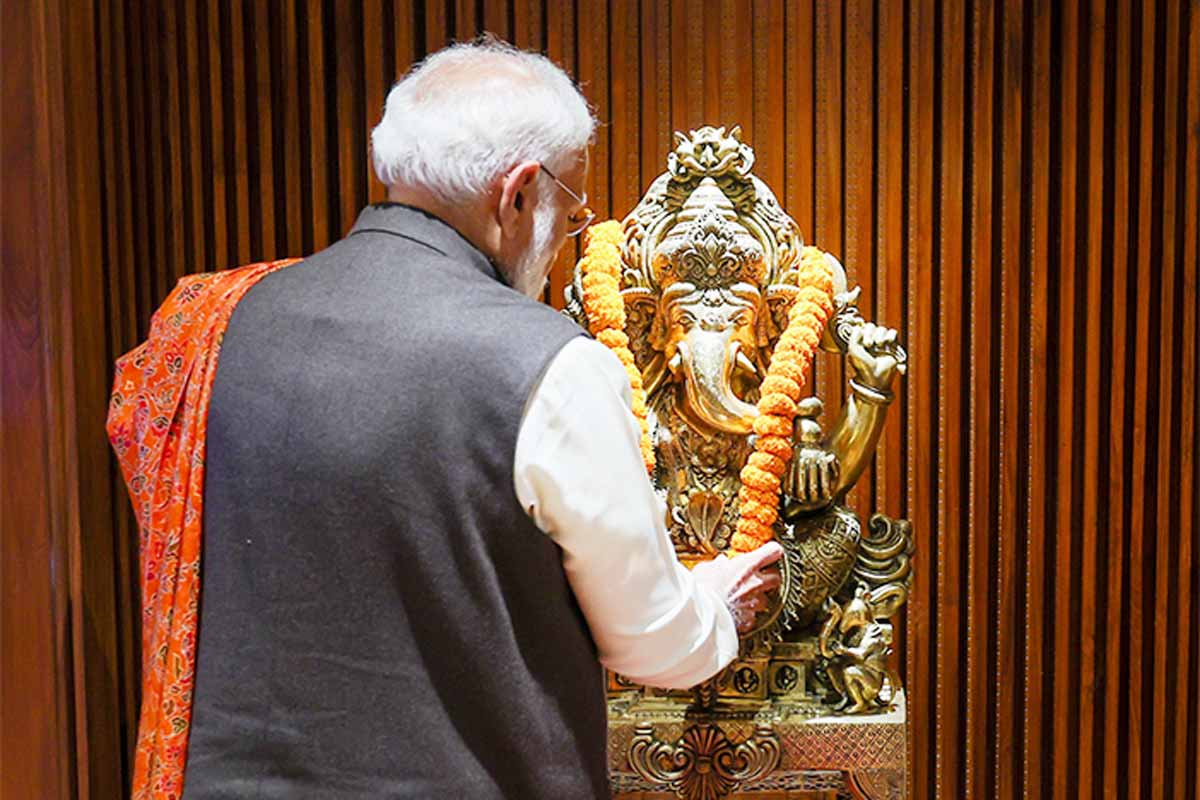


PM Modi Inaugurates Seva Teerth and Kartavya Bhavan: Prime Minister Narendra Modi on Thursday addressed the inaugural event of Seva Teerth and Kartavya Bhavan-1 & 2 in New Delhi, describing the occasion as a historic milestone in India’s development journey and governance transformation.
Speaking on February 13, 2026, the Prime Minister said the day marked a “new beginning” as India advances towards the goal of a developed nation. Referring to the auspicious occasion of Vijaya Ekadashi in the traditional calendar, he said that resolutions taken on this day are believed to lead to victory, adding that the nation was stepping into Seva Teerth and Kartavya Bhavan with the resolve of building a Viksit Bharat.
He congratulated the Prime Minister’s Office team, the Cabinet Secretariat, various departments and the engineers and workers involved in constructing the new complexes, dedicating the facilities to the people of India.
READ: India Allocates Record Rs 7.85 Lakh Crore for Defence in FY 2026-27
Breaking from Colonial-Era Legacy
The Prime Minister reflected on the legacy of colonial-era buildings such as North Block and South Block, from where key decisions were taken after Independence. He noted that while they had played an important role in India’s administrative history, they were originally conceived as symbols of the British Empire.
Recalling that the British shifted the capital from Kolkata to Delhi in 1911, he said the construction of the Raisina Hill complex reflected colonial priorities and symbolism. He pointed out that the architecture was designed to assert imperial authority by placing the structures at an elevated position.
In contrast, he said Seva Teerth and Kartavya Bhavan are rooted in the aspirations of 140 crore citizens and are designed to reflect a democratic ethos. “The decisions taken here will not reflect the thinking of any monarch but will serve the expectations of the people,” he said.
Modern Infrastructure for a Modern India
The Prime Minister underlined that as India moves deeper into the 21st century, governance infrastructure must reflect the country’s developmental ambitions. He noted that many ministries had long functioned from more than 50 different buildings in Delhi, leading to inefficiencies, high rental expenditure and logistical challenges.
According to him, nearly ₹1,500 crore was being spent annually on rent, with thousands of employees commuting daily between scattered offices. The consolidation of ministries within Seva Teerth and Kartavya Bhavans, he said, would significantly reduce costs, improve coordination and save time.
Acknowledging the emotional and historical value of the old buildings, he announced that the previous Prime Minister’s Office premises would be converted into a museum as part of the Yuge Yugeen Bharat Museum initiative, preserving its legacy for future generations.
READ: Resignation Forfeits Pension, But Gratuity Is a Statutory Right: Supreme Court
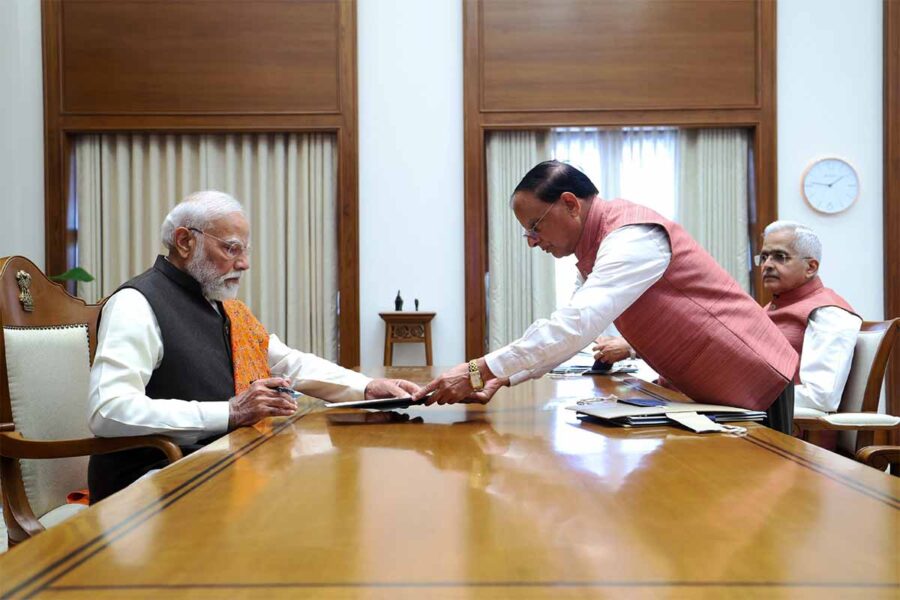
Prime Minister Narendra Modi at the new PMO.
Shedding the Colonial Mindset
The Prime Minister emphasized that India’s journey towards becoming a developed nation requires shedding every trace of colonial mindset. He pointed to several symbolic and structural changes undertaken in recent years.
He noted the renaming of Race Course Road to Lok Kalyan Marg as a shift from a symbol of power to one of public service. He also cited the creation of the National War Memorial and the Police Memorial to honor martyrs, saying independent India must commemorate its own heroes.
Similarly, Rajpath was redeveloped and renamed Kartavya Path to reflect duty rather than authority. The installation of a grand statue of Netaji Subhas Chandra Bose in the Central Vista complex, the renaming of Mughal Gardens to Amrit Udyan, and the rechristening of the old Parliament building as Samvidhan Sadan were described as part of a broader effort to align national symbols with India’s civilizational ethos.
“These are not mere changes of words, but a consistent ideological thread of an independent India with its own identity,” he said.
READ: ‘Sar tan se juda’ slogan challenges India’s integrity, incites rebellion: Allahabad High Court
Seva Teerth: Governance as Service
Explaining the naming of the new Prime Minister’s Office as Seva Teerth, Modi said service is the soul and identity of India. He invoked the spiritual philosophy of serving humanity as a form of worship and said governance must embody dedication and responsibility.
He described Seva Teerth not merely as a building but as a resolve — a sacred place dedicated to fulfilling the pledge of service to citizens. The concept of “Teerth,” he said, implies a place that enables achievement of higher goals. For India, these goals include becoming a developed nation, achieving self-reliance, eradicating poverty and freeing itself from colonial legacies.
He stressed that every file moved and every decision taken in Seva Teerth must aim at improving the lives of citizens, urging officials to reflect daily on whether their work eases the lives of millions.
Citizen-Centric Governance Model
The Prime Minister said that over the past eleven years, governance in India has evolved into a model where the citizen is at the center of decision-making. He reiterated that “Nagrik Devo Bhava” is not merely a phrase but a working culture that should define administrative functioning in the new complexes.
He asserted that governance driven by the spirit of service has produced tangible outcomes, including lifting 25 crore people out of poverty and giving fresh momentum to the economy. Developed India 2047, he said, is not just a target year but a pledge before the world.
Recalling Mahatma Gandhi’s belief that rights are built on the foundation of duty, the Prime Minister said that duty is the lifeblood of a living nation. He described duty as equality, compassion and commitment to “Sabka Saath, Sabka Vikas,” calling upon officials to enter the new buildings with a deep sense of responsibility.
READ: Supreme Court Directs Courts to Dispose of Bail Matters in Two Months
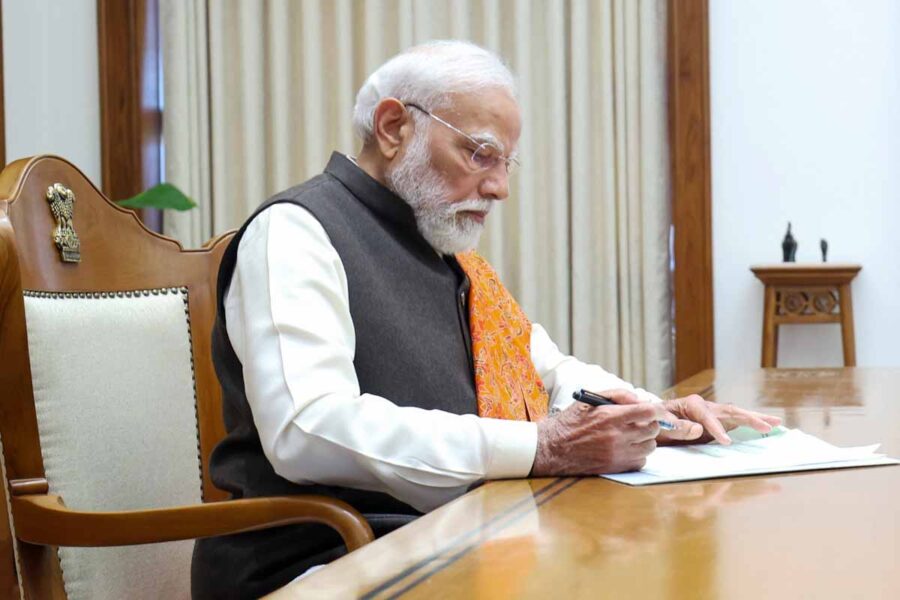
Prime Minister Narendra Modi at the new PMO.
Transforming Administrative Architecture
Earlier in the day, Modi unveiled the name Seva Teerth before formally inaugurating Seva Teerth and Kartavya Bhavan-1 & 2. The new complexes are designed to transform India’s administrative governance architecture by consolidating key offices into modern, integrated facilities.
Seva Teerth houses the Prime Minister’s Office, the National Security Council Secretariat and the Cabinet Secretariat, which were previously located at different sites. Kartavya Bhavan-1 & 2 accommodate several major ministries, including Finance, Defence, Health & Family Welfare, Corporate Affairs, Education, Culture, Law & Justice, Information & Broadcasting, Agriculture & Farmers Welfare, Chemicals & Fertilizers, and Tribal Affairs.
The complexes feature digitally integrated offices, structured public interface zones and centralized reception facilities aimed at enhancing efficiency and citizen engagement. Built to 4-Star GRIHA standards, they incorporate renewable energy systems, water conservation mechanisms and waste management solutions.
Equipped with smart access controls, surveillance systems and advanced emergency response infrastructure, the facilities are intended to provide a secure and accessible environment for officials and visitors.
READ: Air India and Singapore Airlines Sign Framework Agreement to Deepen Commercial Cooperation
“This Is the Time,” Says PM
Concluding his address, Modi said that India’s global identity in the coming decades will be defined not only by economic growth but by the quality of governance and the dedication of its public servants.
Every decision taken in Seva Teerth and Kartavya Bhavan, he said, would help shape the direction of Developed India 2047. Calling 2047 a timeline of 140 crore dreams, he urged officials to work in the spirit of Nation First, recalling his words from the Red Fort: “This is the time, the right time.”
He expressed confidence that Seva Teerth would emerge as a symbol of sensitive, citizen-centric governance where service prevails over power and responsibility over authority, marking what he described as the beginning of a new era in India’s administrative history.
READ: Justice Suryakant Backs India as New Destination for International Arbitration