

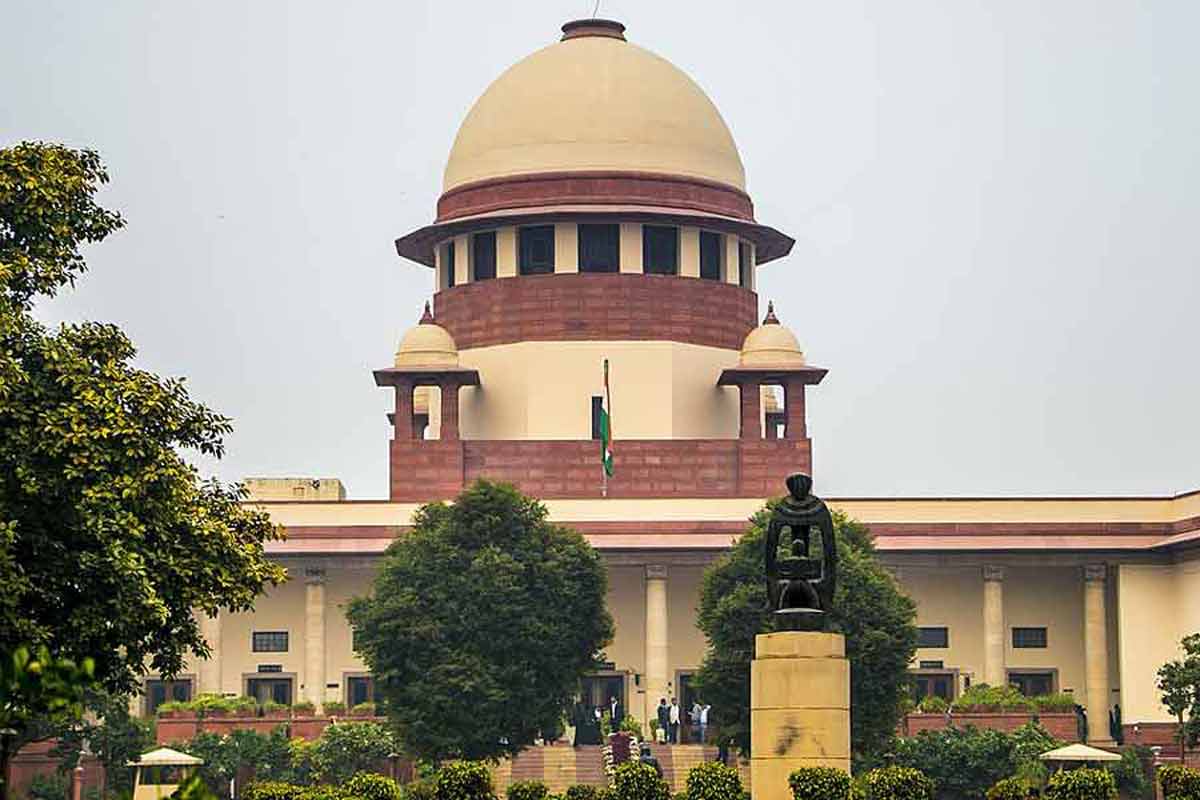


In a significant judgment, the Supreme Court of India has quashed the proceedings against an alleged gangster, Gabbar Singh, under the Uttar Pradesh Gangsters and Anti-Social Activities (Prevention) Act, 1986, due to severe procedural irregularities in the preparation and submission of the Gang Chart. The Court emphasized that when the law mandates a particular procedure, it must be followed to the letter, particularly in cases where an individual’s personal liberty is at stake.
The Case and the Court’s Findings
A bench of Justices Sanjay Kumar and K. Vinod Chandran was hearing a civil appeal filed by Gabbar Singh, challenging an FIR registered against him in Bahraich, Uttar Pradesh. The FIR alleged that Singh was part of a gang involved in serious offenses, including land grabbing, extortion, and forgery. The prosecution relied heavily on a Gang Chart that listed Singh’s name as part of a criminal gang to invoke the stringent provisions of the Gangster Act.
However, the Court found glaring procedural flaws in the preparation and forwarding of the Gang Chart. According to the Uttar Pradesh Gangsters and Anti-Social Activities (Prevention) Rules, 2021, the Gang Chart must include several mandatory steps, including recommendations and signatures from key authorities, such as the Station House Officer (SHO), Additional Superintendent of Police, Superintendent of Police, and the District Magistrate.
READ: Petroleum Ministry Drafts Petroleum and Natural Gas Rules of 2025
Key Procedural Irregularities
The Supreme Court noted that the Gang Chart submitted in this case lacked the mandatory signatures and recommendations of the SHO and Additional Superintendent of Police, which are required under the Gangster Act and the Rules of 2021. Specifically, the Gang Chart had not been properly recommended by the Nodal Officer (SHO) or the Additional Superintendent of Police, nor did it bear the signatures of the Superintendent of Police and District Magistrate, which are required after a joint meeting between these authorities.
The Court found that these omissions fundamentally undermined the legality of the Gang Chart. As a result, the Court held that an incomplete Gang Chart cannot be sent to the jurisdictional court, as it does not meet the legal requirements necessary to invoke the provisions of the Gangster Act.
READ: Petroleum Ministry Drafts Petroleum and Natural Gas Rules of 2025
The Court’s Ruling
In its judgment, authored by Justice K. Vinod Chandran, the Court observed that the Gang Chart cannot assume legal validity unless it goes through a structured process, as prescribed by the Act and the Rules. The process involves:
- Express Recommendation: The SHO and Additional Superintendent of Police must provide a clear recommendation for the inclusion of an individual in the Gang Chart.
- Joint Meeting: A joint meeting must take place between the Superintendent of Police and the District Magistrate to review and approve the Gang Chart.
- Final Approval: After the joint meeting, the Gang Chart must bear the signatures of the Superintendent of Police and District Magistrate.
The Court further clarified that the Gang Chart must be forwarded with the approval and signatures of these authorities before it can be presented to the jurisdictional court. The absence of these critical steps, the Court held, rendered the Gang Chart invalid.
The Principle of Strict Compliance
The bench reiterated the well-established principle that when a statute prescribes a particular procedure, it must be followed precisely. The Court pointed out that procedural safeguards, especially in cases involving the Gangster Act, are crucial because labeling someone as a “gangster” carries serious consequences, including a social stigma, deprivation of liberty, and possible punitive actions. Therefore, strict adherence to the prescribed process is indispensable, as the law must protect individuals from arbitrary actions that could lead to serious harm.
“We fall back upon the principle that when a particular thing is to be done, it should be done in the manner stipulated; here statutorily prescribed, or not at all. Especially when at stake is the liberty of an individual, precious to all and possible of breach only in accordance with law,” the Court stated in its judgment.
READ: Indian Navy Commissions ASW Ship INS Anjadip
Court’s Directives on Future Compliance
The Court also highlighted the importance of compliance with the Uttar Pradesh Gangsters and Anti-Social Activities (Prevention) Rules, 2021, in future cases. It stressed that express recommendations by the SHO and Additional Superintendent of Police, as well as approval through a joint meeting with signatures, are not mere formalities but foundational requirements for the Gang Chart to be considered valid.
Implications of the Ruling
This ruling underscores the critical importance of procedural compliance in criminal law, particularly in cases that invoke stringent statutes like the Gangster Act. By quashing the FIR in this case, the Supreme Court has reinforced that legal processes must be meticulously followed to protect the rights of individuals and ensure justice. This judgment may have broader implications, urging law enforcement authorities to be more diligent in adhering to prescribed procedures, especially in serious cases involving accusations of organized crime.
The decision is likely to be cited in future cases involving the Gangster Act to argue for strict compliance with procedural requirements and to challenge any lapses or irregularities in the preparation of Gang Charts.
The Supreme Court’s ruling in Gabbar Singh alias Devendra Pratap Singh vs. State of U.P. sets an important precedent in the application of the Uttar Pradesh Gangsters and Anti-Social Activities (Prevention) Act, 1986. The Court’s decision to quash the FIR based on procedural irregularities emphasizes the need for adherence to the statutory procedures when dealing with matters as serious as labeling someone a “gangster.” The judgment serves as a reminder that the law must be followed with precision, especially when an individual’s liberty is at risk.
READ: President Appoints New Governors for West Bengal, Delhi, and Bihar