
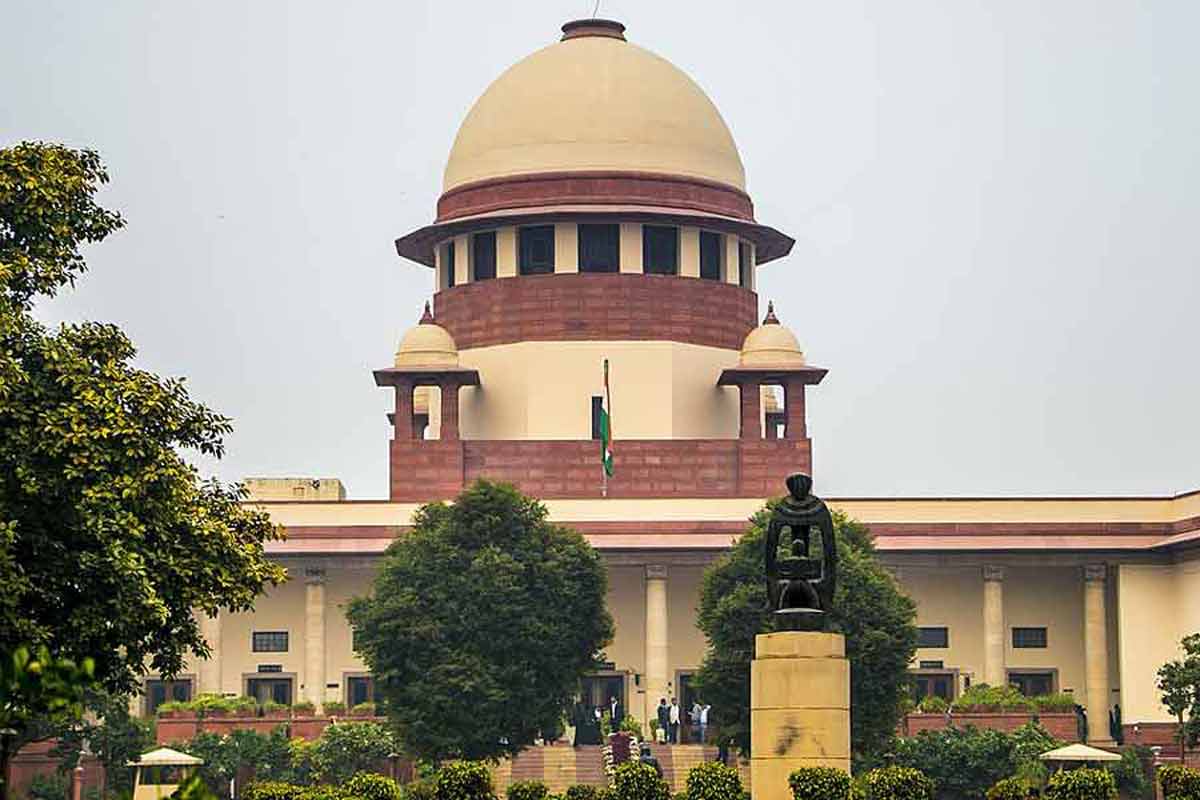


The Supreme Court of India has directed all states and Union Territories (UTs) to submit detailed affidavits about the current condition of prisons, with a particular focus on overcrowding and the steps being taken to address the issue. The bench, consisting of Justice Vikram Nath and Justice Sandeep Mehta, passed the order in response to a Public Interest Litigation (PIL) regarding the concerning levels of overcrowding in prisons across the country.
The order was issued after considering the submissions of Adv. Gaurav Agrawal, the amicus curiae in the matter, who pointed out that the Court did not have updated statistics on the state of Indian prisons. The bench stressed that without this information, it would be difficult to assess the extent of the problem and the effectiveness of any remedial actions taken so far.
In the latest development, the Court has directed all states and UTs to file affidavits detailing the state-wise conditions of their prisons. The affidavits must include specific information regarding the capacity of each jail, the number of prisoners currently lodged, the percentage of overcrowding, and the steps being proposed or already undertaken to alleviate the problem.
The directions are part of the ongoing case titled “Re-Inhuman Conditions in 1382 Prisons v. Director General of Prisons and Correctional Services and Ors.” (W.P.(C) No. 406/2013). This case, filed years ago, seeks to address the dire and inhumane conditions in the country’s overcrowded prisons.
Key Details Required in Affidavits
The Court has outlined several specific aspects that must be addressed in the affidavits. These include:
- Prison Capacity and Occupancy
States and UTs must provide complete details on the sanctioned capacity of each prison and the total number of prisoners currently lodged within them. This should include both undertrials and convicts. The details must be accurate as of March 1, 2026, and should include jail-wise statistics reflecting the extent of overcrowding. - Steps to Address Overcrowding
The Court has emphasized the need for states to report the measures they are currently undertaking or planning to reduce overcrowding in their prisons. This includes compliance with previous orders passed by the Court, such as those made in the Suhas Chakma v. Union of India case, which also addresses issues of overcrowding and the conditions in prisons. - Facilities for Women and Children
Another crucial aspect of the affidavits will be detailing the conditions in women’s prisons. States must report on the number of women’s prisons within their jurisdiction and the facilities available to women prisoners, particularly those with children. The affidavit must also provide information on the availability of paediatric care, educational programs for children accompanying women prisoners, and the presence of teachers and counselors to support the children’s overall welfare. - Prison Staff and Vacancies
The Court has also asked for detailed information regarding the sanctioned strength of prison staff, along with existing vacancies. It has directed states to report the steps taken to fill these vacancies and improve the staffing situation, ensuring that the prison administration is better equipped to handle the challenges posed by overcrowding.
READ: Indian-American Legal Powerhouse Neal Katyal: Son of Immigrants Who Stopped Trump’s Tariffs
Deadline for Submission
States and UTs have been given a two-month deadline to submit their affidavits, which must be sworn by the respective Home Secretaries. The affidavits should be filed by May 18, 2026, and will be reviewed during the next hearing on May 26, 2026.
This order is part of the ongoing judicial scrutiny over prison conditions in India, an issue that has long been a cause of concern for both human rights groups and the judiciary. Overcrowding remains a critical issue, with prisons across the country operating well beyond their capacity, often leading to substandard living conditions for inmates. The Supreme Court’s move to ask for detailed affidavits is seen as an important step in bringing transparency to the situation and ensuring that corrective measures are taken.
Importance of the Case
The issue of overcrowded prisons is not a new one. India’s prison system has long struggled with inadequate infrastructure and understaffing, leading to severe overcrowding. According to recent reports, the prison population in India is often more than double its official capacity, creating unsafe and unhealthy conditions for both prisoners and staff. Furthermore, the conditions are particularly dire for women prisoners and children residing with their mothers in prison, with limited access to healthcare, education, and other basic services.
Legal experts have argued that addressing overcrowding is not only a matter of improving living conditions but also of upholding the fundamental rights of prisoners. The Supreme Court’s intervention highlights the urgency of the issue and signals its commitment to ensuring better conditions for prisoners across the country.
As the deadline approaches, all eyes will be on how effectively states and UTs respond to the Court’s order. While the submissions will provide a clearer picture of the prison conditions, the real challenge lies in the implementation of the proposed decongestion measures and the commitment to improving the overall welfare of inmates. The outcome of this case could have long-lasting effects on the future of India’s prison reform efforts.
READ: Supreme Court Reaffirms Strict Adherence to Procedural Safeguards in U.P. Gangster Law Cases