
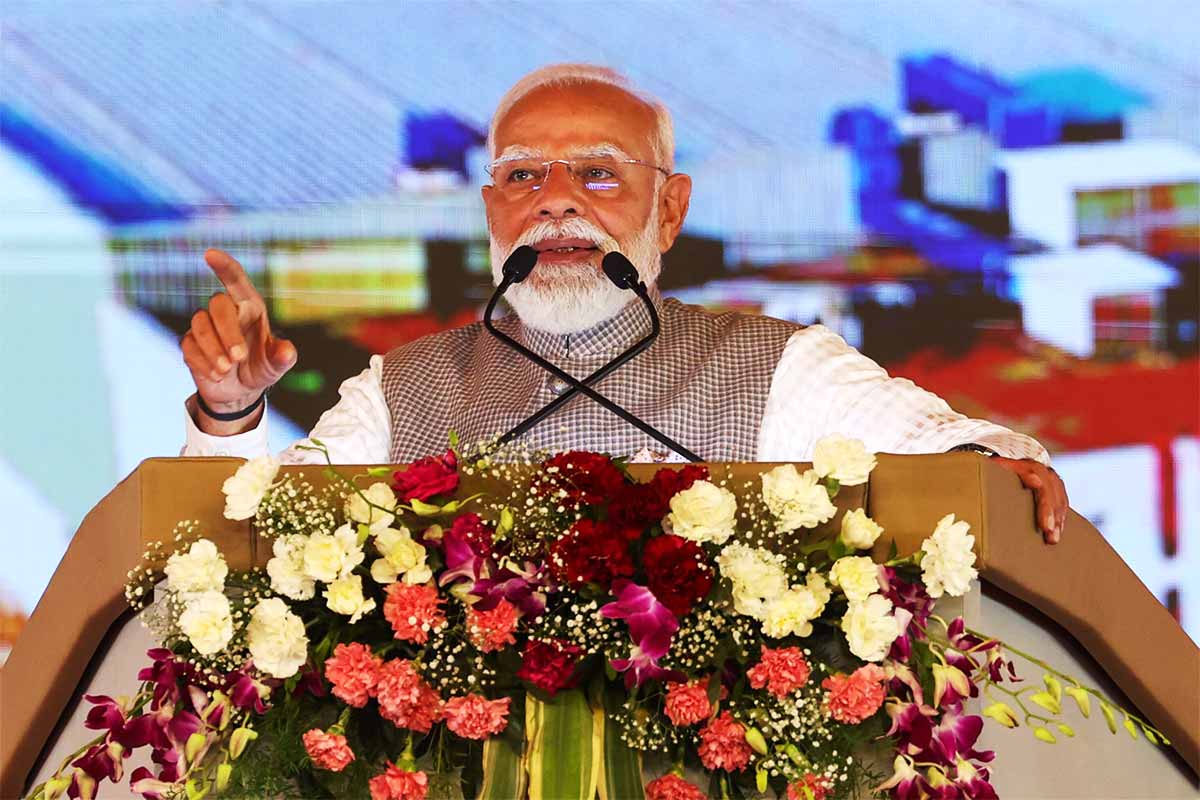
Noida International Airport at Jewar: New Delhi/Jewar, March 28, 2026 — Prime Minister Narendra Modi on Saturday inaugurated the first phase of the Noida International Airport at Jewar, a flagship infrastructure project built at an estimated cost of $1.19 billion USD (₹11,200 crore). The launch marks a significant milestone in India’s aviation expansion and Uttar Pradesh’s emergence as a key economic hub.
Calling the project a “new chapter” in the vision of a developed India, Modi said the airport symbolizes both regional transformation and national ambition. “Airports are not just basic facilities — they give wings to progress,” he said, underscoring the government’s push to build world-class infrastructure.
A Strategic Aviation Hub for North India
The Noida International Airport is expected to serve a vast catchment area across western Uttar Pradesh and parts of the National Capital Region, including Agra, Mathura, Ghaziabad, Meerut, Aligarh, and Faridabad. Officials say the airport will significantly ease congestion at Delhi’s existing airport while unlocking new economic opportunities across the region.
Modi noted that Uttar Pradesh has now become one of the Indian states with the highest number of international airports, reflecting rapid growth in aviation connectivity. The Prime Minister, who had earlier laid the foundation stone for the project, described the inauguration as a moment of personal and national pride.
“This airport will connect farmers, industries, and youth of western Uttar Pradesh to global markets,” he said, adding that it would accelerate exports, boost logistics, and attract investment.
Infrastructure Push Amid Global Uncertainty
The inauguration comes at a time of global economic volatility, with ongoing conflict in West Asia disrupting supply chains for critical commodities such as fuel, fertilizers, and food. Modi acknowledged India’s dependence on energy imports from the region but assured that the government is taking steps to shield citizens and farmers from the impact.
Despite these challenges, he emphasized that India continues to maintain strong development momentum. In recent weeks alone, western Uttar Pradesh has seen multiple infrastructure milestones, including a semiconductor plant foundation in Noida, expansion of metro connectivity in Meerut, and the rollout of the Delhi-Meerut rapid rail corridor.
Multi-Modal Connectivity and Logistics Growth
Highlighting the region’s growing importance as a logistics hub, the Prime Minister pointed to the convergence of major freight corridors at Dadri, enabling seamless connectivity between northern India and ports on both eastern and western coasts. Combined with the new airport, this multi-modal infrastructure is expected to dramatically improve the movement of goods and passengers.
“This kind of connectivity is making Uttar Pradesh a major attraction for global investors,” Modi said.
READ: Finance Ministry Revamps Mutual Credit Guarantee Scheme to Boost MSME Manufacturers and Exporters
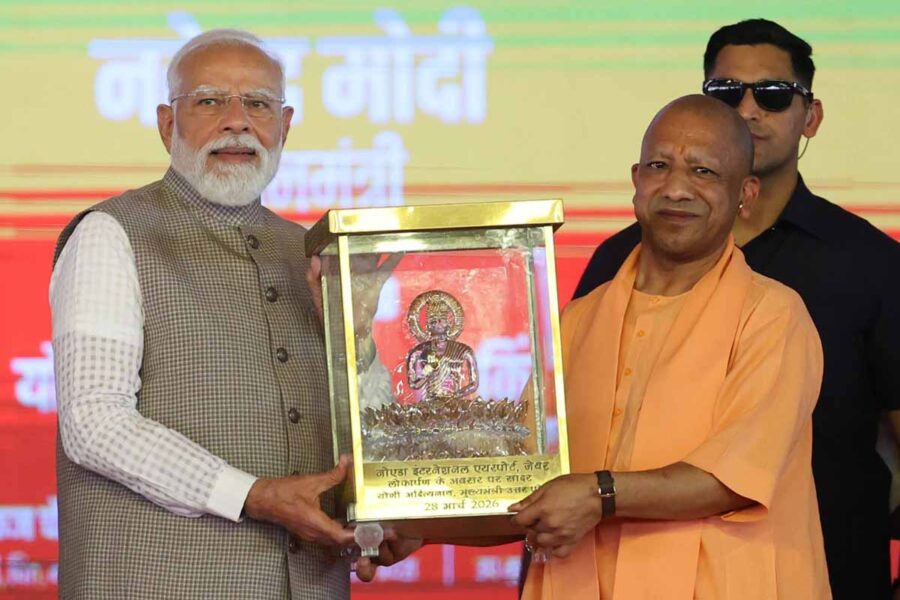
PM Modi with Uttar Pradesh Chief Minister Yogi Adityanath at the inauguration of Noida International Airport in Jewar. (March 28, 2026).
Boost to Agriculture and Rural Economy
The Prime Minister also acknowledged the role of farmers in enabling the project, thanking those who contributed land for the airport. He noted that improved connectivity would boost food processing industries and allow agricultural produce from the region to reach international markets more efficiently.
Modi highlighted the growing role of ethanol production from sugarcane in reducing India’s crude oil imports. According to him, increased ethanol blending has helped save substantial foreign exchange while improving farmer incomes.
Expanding India’s Aviation Ecosystem
India’s aviation sector has seen rapid growth, with more than 160 airports now operational across the country. Modi said the government’s focus has been on making air travel accessible beyond major cities, extending connectivity to smaller towns under the UDAN scheme.
He added that over 16 million passengers have already benefited from affordable air travel under the scheme. The government has recently approved an additional ₹29,000 crore (~$3.09 billion USD) to expand the initiative further, including plans to build 100 new airports and 200 helipads.
READ: Supreme Court Asks States and UTs to File Affidavits on Prisons’ Condition
Focus on MRO and Job Creation
Addressing a critical gap in the aviation ecosystem, Modi highlighted the need to develop domestic Maintenance, Repair, and Overhaul (MRO) capabilities. Currently, a majority of Indian aircraft undergo maintenance abroad.
To address this, the foundation stone for a new MRO facility was also laid at Jewar. Once operational, it is expected to serve both domestic and international aircraft, generate employment, and reduce outflow of foreign exchange.
Vision for ‘Viksit Bharat’
Reiterating the government’s long-term vision, the Prime Minister said infrastructure investment has increased more than six-fold over the past decade, with major expansions in highways, railways, ports, and waterways.
He emphasized that nearly the entire broad-gauge railway network is now electrified and that connectivity is being extended to previously underserved regions, including the Northeast and Kashmir Valley.
“India is working at a rapid pace in every sector necessary for building a developed nation,” Modi said, calling for unity and resilience in navigating global challenges.
Note: ₹94 per USD.
Don’t Miss: President Appoints New Governors for West Bengal, Delhi, and Bihar
Don’t Miss: India and Canada Reset Ties With PM Mark Carney’s India Visit