


India Defence Budget 2026: February 1, 2026, New Delhi: In a decisive move to bolster India’s national security, the Union Budget 2026 has allocated a historic $85.67 billion (₹7.85 lakh crore) to the defence sector, marking the largest-ever budgetary provision for the armed forces. This landmark allocation, a 15% increase from last year, comes in the wake of the “historic success” of Operation Sindoor—a major military operation that demonstrated India’s strategic capabilities and further reinforced the nation’s resolve to enhance its defence infrastructure.
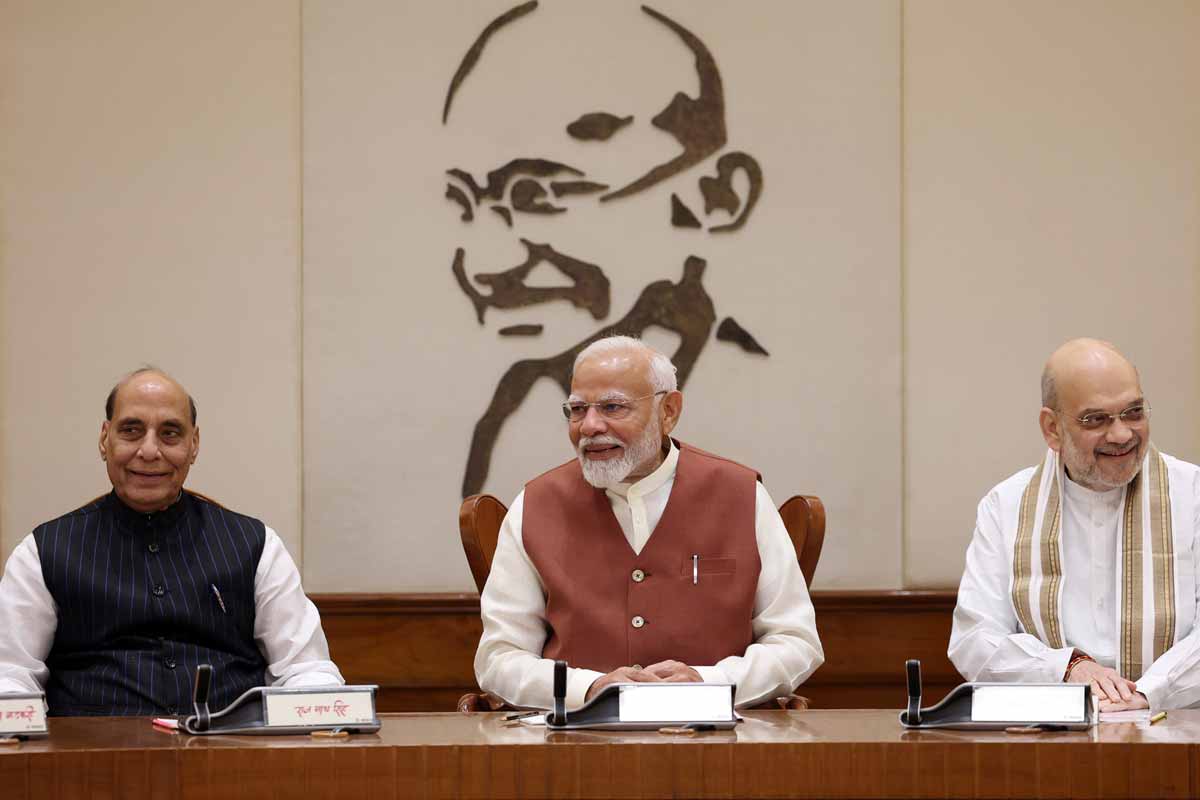
Defence Minister Rajnath Singh hailed the allocation, emphasizing that the increase in defence spending “strengthens our resolve to make India’s defence system even more robust.” He also acknowledged Prime Minister Narendra Modi’s leadership in ensuring a well-rounded approach to security, development, and self-reliance, underscoring that the budget is designed to propel India’s military capabilities to global standards while fostering domestic industry growth.
READ: Air India and Singapore Airlines Sign Framework Agreement to Deepen Commercial Cooperation
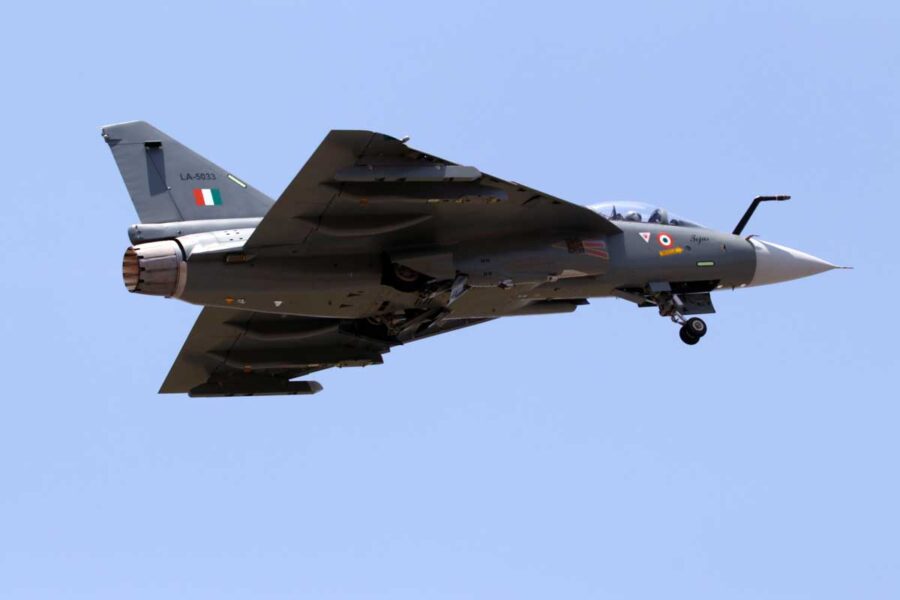
Maiden flight of Tejas Mk1A (March 28, 2024, India).
READ: PM Modi Stresses on Ease of Justice on NALSA Foundation Day
Defence Budget Overview
The $85.67 billion (₹7.85 lakh crore) outlay accounts for 2% of India’s projected GDP for the financial year 2026–27, with defence spending now constituting 14.67% of the total Union government expenditure—the highest share among all ministries.
The hike in the defence budget aims not only to support ongoing modernisation efforts and routine operational needs but also to address the financial demands triggered by emergency procurements following Operation Sindoor. Both capital and revenue expenditure have been significantly enhanced.
The capital expenditure allocation, in particular, has seen a sharp increase to $23.90 billion (₹2.19 lakh crore), up from $19.63 billion (₹1.8 lakh crore) in 2025–26, signifying a heightened focus on upgrading India’s military capabilities.
READ: Explained: How Impeachment of Judges Works in India
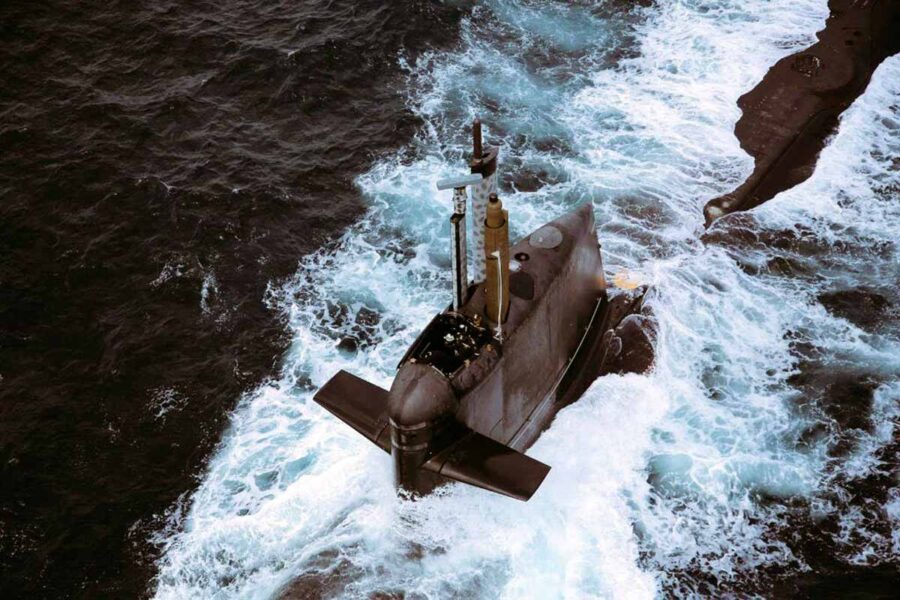
Indian Navy’s INS Vagsheer Submarine.
Strategic Focus on Modernisation and Indigenous Production
A significant portion of the defence budget has been directed towards modernisation and self-reliance. The total capital expenditure allocation of $23.90 billion (₹2.19 lakh crore) represents a 22% increase from last year. Within this, $20.19 billion (₹1.85 lakh crore) will be dedicated to capital acquisition, reflecting the government’s commitment to acquiring next-generation military technologies.
Key upcoming projects include the development of advanced fighter aircraft, new submarines, UAVs (unmanned aerial vehicles), drones, and smart weaponry.
Importantly, the budget emphasizes indigenous production, with $15.17 billion (₹1.39 lakh crore)—or 75% of the capital acquisition budget—earmarked for domestic procurement. This move is in line with the government’s push to promote Aatmanirbhar Bharat (Self-reliant India) and create jobs within the domestic defence sector.
READ: Supreme Court Directs Courts to Dispose of Bail Matters in Two Months
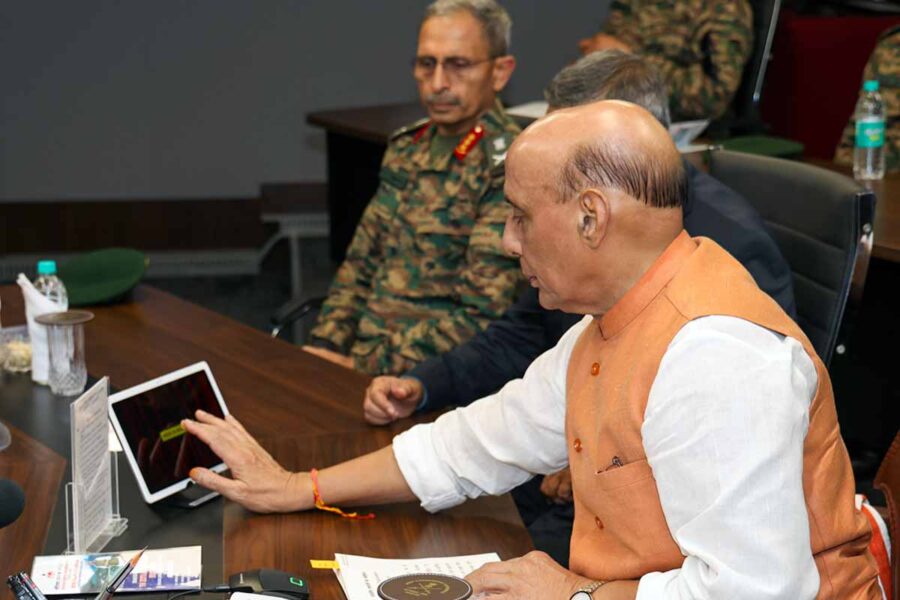
Defence Minister Rajnath Singh opened 750 border projects on China border.
READ: NISAR Satellite Marks Historic Milestone in U.S.-India Space Cooperation
Supporting Veterans and Strengthening Border Infrastructure
The 2026 Union Budget has also allocated significant funds for the welfare of ex-servicemen, with increased provisions for defence pensions and healthcare for veterans. Additionally, the budget highlights enhanced spending on border infrastructure, ensuring the nation’s security infrastructure keeps pace with evolving threats.
Revenue expenditure has been boosted to $39.82 billion (₹3.65 lakh crore), facilitating the operational needs of the armed forces and the ongoing strategic upgrades in defence systems. Furthermore, funding for research and development (R&D) has been ramped up, signaling the government’s emphasis on advancing defence technology through innovation and collaboration with domestic research agencies.
Defence Minister Rajnath Singh, in his statement, expressed his gratitude to Prime Minister Modi for the “historic allocation,” which he said will “strengthen the balance between security, development, and self-reliance.” He reiterated that the post-Operation Sindoor defence budget reflects a robust vision for India’s security, with enhanced military capabilities, strategic self-reliance, and a focus on the welfare of service members and veterans.
“The increased budget allocation is a direct response to the evolving security challenges, and it reinforces the government’s resolve to enhance the military’s operational readiness while strengthening national security in the long run,” Singh added.
READ: Hanwha Ocean Opens India Global Engineering Center in Delhi-NCR